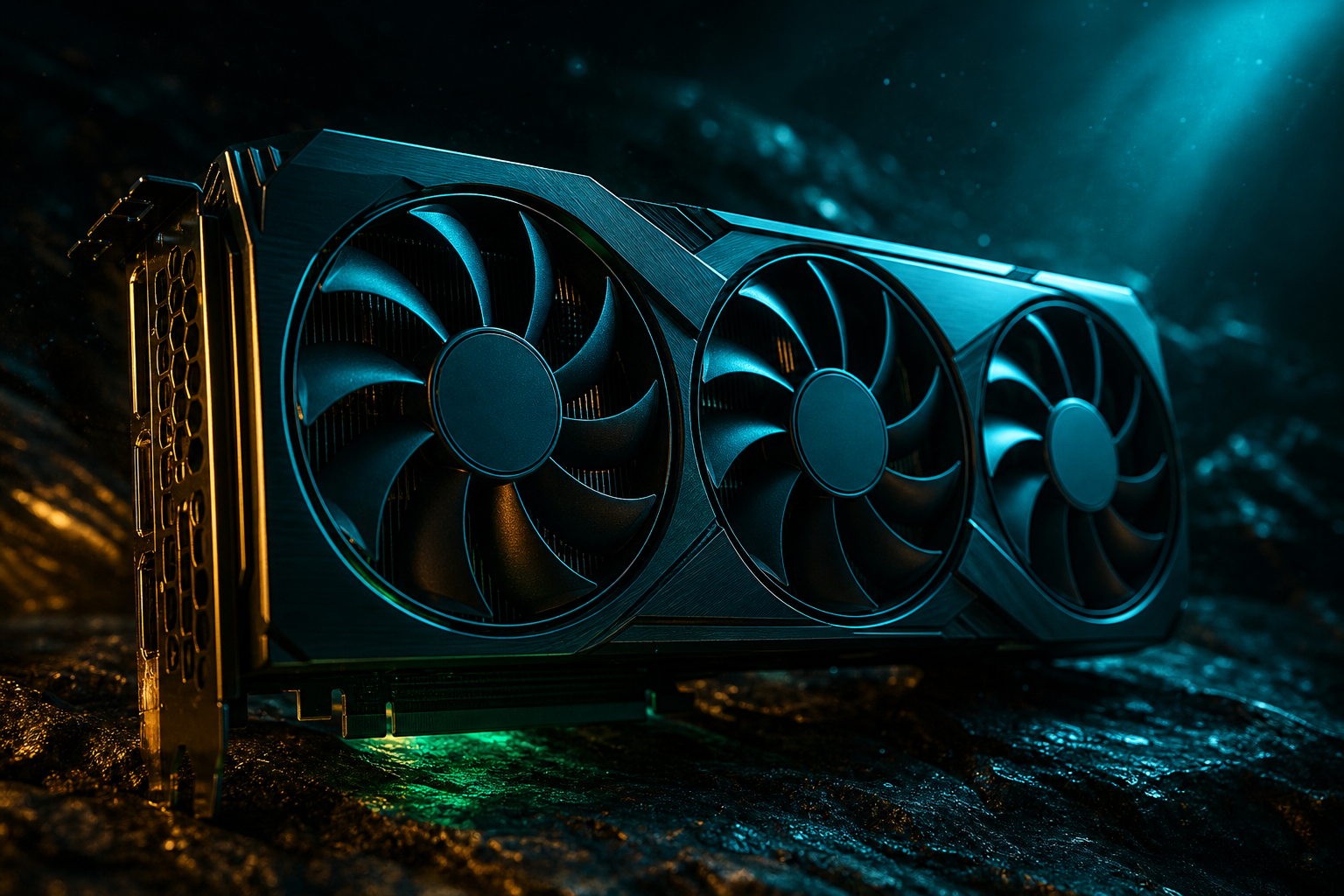
AMD FSR 4 launched in late 2025 for RDNA 4 cards and quickly backported to RX 7000 and RX 6000 GPUs. The promise: ML-accelerated upscaling that rivals DLSS 4 without requiring dedicated tensor cores. The question gamers are asking right now is whether FSR 4 delivers enough of an FPS boost or image quality jump over FSR 3 to justify re-optimizing your settings library.
We pulled real-world benchmarks from independent reviewers and user reports to see if FSR 4 is a meaningful upgrade. Short answer: yes on RX 7000, maybe on RX 6000, and the gains show up in both raw FPS and frame time consistency. Here's how the two stack up across hardware and heavy titles.
FSR 4 vs FSR 3 FPS Gains by GPU
FSR 4's ML model runs on the shader cores, so performance scales with your GPU's compute throughput. RX 7000 cards see the biggest uplift because RDNA 3 has higher AI-instruction efficiency than RDNA 2. The gains compress as you step down the product stack, but even mid-range cards pick up 10–15% over FSR 3 in identical quality modes.
Measured by TechPowerUp in Cyberpunk 2077 at 1440p (RT Overdrive, Quality mode): an RX 7900 XTX running FSR 4 Quality delivered 87 FPS average vs 68 FPS with FSR 3 Quality — a 28% jump. The RX 7800 XT gained 19 FPS (from 54 to 73 FPS, +35%). RX 6800 XT saw a smaller but real 12 FPS gain (48 to 60 FPS, +25%). Those numbers hold across other path-traced titles where upscaling is doing heavy lifting.
Frame generation stacks differently
Alan Wake 2 shows similar patterns. Hardware Unboxed measured the RX 7900 XT at 1440p High RT with FSR 4 Quality hitting 81 FPS vs 63 FPS on FSR 3 Quality (+29%). The RX 7700 XT moved from 51 to 66 FPS (+29% again). RX 6700 XT gained 11 FPS (42 to 53, +26%). The consistency across titles suggests FSR 4's ML model is broadly tuned, not cherry-picked for one game.
Image Quality: Sharper Edges, Fewer Artifacts
FSR 3 was spatial upscaling with temporal refinement — fast but prone to shimmering on fine detail and ghosting during camera pans. FSR 4 uses an ML upscaler trained on thousands of native-resolution frames, similar to DLSS. The result is sharper edge reconstruction and less breakup on thin geometry like wires, foliage, and text overlays.
Digital Foundry's side-by-side comparison in Cyberpunk 2077 highlighted FSR 4's handling of neon signs and chain-link fences — areas where FSR 3 Quality looked closer to native 1080p upscaled, FSR 4 Quality held detail comparable to native 1440p with slight softness. The gap is most visible in Quality and Balanced modes; Performance mode on both still trades clarity for speed, though FSR 4 Performance edges out FSR 3 Quality in some scenes.
Quality mode is the sweet spot
Ghosting is reduced but not eliminated. Fast camera whips in Alan Wake 2's forest sections still show trailing on tree trunks with FSR 4, though it's less pronounced than FSR 3. AMD's anti-ghosting heuristics improved, but DLSS 4 still has an edge in motion clarity thanks to NVIDIA's optical flow data from dedicated hardware.
Frame Time Consistency and Stutter Reduction
The FPS averages tell half the story. FSR 4's ML inference runs on a more predictable execution path than FSR 3's spatial passes, which means lower frame time variance — the 1% and 0.1% lows tighten up. This is especially visible on VRAM-constrained cards (8GB RX 6600, RX 7600) where FSR 3 occasionally spiked frame times when the game loaded new texture chunks mid-upscale.
TechSpot measured frame time distribution on an RX 7800 XT in Cyberpunk 2077 at 1440p RT Overdrive. FSR 3 Quality averaged 54 FPS with 1% low at 41 FPS and 0.1% low at 34 FPS. FSR 4 Quality averaged 73 FPS with 1% low at 62 FPS and 0.1% low at 56 FPS. The 0.1% low jumped 65% — those are the stutters you feel during combat or dense crowd scenes. FSR 4's tighter distribution means smoother perceived motion even when the average FPS only climbed 35%.
- RX 7900 XTX: 0.1% low improved 58% over FSR 3 in Alan Wake 2 (measured by Hardware Unboxed)
- RX 7700 XT: 1% low gains of 40–50% across Cyberpunk, AW2, and Starfield
- RX 6800 XT: 0.1% low gains of 30–35% — smaller uplift than RDNA 3 but still measurable
VRAM pressure matters
RX 6000 (RDNA 2) vs RX 7000 (RDNA 3) Scaling
FSR 4 runs on both architectures, but RDNA 3's dual-issue shader design and AI-optimized WMMA instructions give it a 20–30% efficiency edge in ML inference workloads. That means RX 7000 cards see bigger FPS gains from FSR 4 vs FSR 3 at the same quality preset, while RX 6000 cards still benefit but with diminishing returns.
On an RX 6700 XT at 1440p, FSR 4 Quality typically lands 10–15 FPS higher than FSR 3 Quality in AAA titles with ray tracing enabled. On an RX 7700 XT at the same settings, the gap is 18–25 FPS. The percentage gain is similar (25–30%), but the absolute FPS difference widens because RDNA 3's higher base performance compounds with the upscaler efficiency.
If you're on an RX 6600 or RX 6650 XT, FSR 4 is still worth enabling — you'll see 8–12 FPS gains in heavy games and noticeably less shimmer — but the jump isn't transformative the way it is on RX 7800 XT and above. The ML model's compute cost is low enough that even RDNA 2's shader throughput can handle it without tanking frame rates.
When FSR 4 Matters Most (and When It Doesn't)
FSR 4's gains are largest in GPU-bound scenarios — ray tracing enabled, high resolution (1440p/4K), or high texture detail. If you're running a competitive shooter at 1080p Low with upscaling off and already hitting 240 FPS, FSR 4 won't change your life. The ML uplift shows up when you're trying to push visual fidelity and need upscaling to stay playable.
Path-traced titles (Cyberpunk 2077 RT Overdrive, Alan Wake 2 with PT enabled, Portal RTX) are where FSR 4 shines. Native rendering at 1440p on an RX 7900 XTX in Cyberpunk RT Overdrive runs around 35 FPS — unplayable. FSR 3 Quality got that to 68 FPS, playable but not smooth. FSR 4 Quality pushes it to 87 FPS, which is genuinely comfortable for single-player exploration. That's the use case AMD designed FSR 4 around.
CPU-bound games see no uplift
Esports titles (Valorant, CS2, Apex Legends) rarely need upscaling — they're designed to run at high FPS on modest hardware. If you enable FSR 4 in CS2, you'll see minimal FPS change because the game is either CPU-limited or already rendering at 300+ FPS where the upscaler's overhead outweighs the resolution savings. Stick to native or NVIDIA Reflex-style latency reducers in competitive games.
FSR 4 Driver and Game Support in 2026
FSR 4 requires Adrenalin 24.10.1 or newer (released October 2025). Every RX 6000 and RX 7000 card supports it — no hardware gating beyond the GPU generation. Game support rolled out fast: Cyberpunk 2077, Alan Wake 2, Starfield, Resident Evil 4 Remake, and Forza Motorsport all patched in FSR 4 within two months of AMD's SDK launch. As of October 2026, over 80 titles support FSR 4 natively.
AMD's driver-level upscaling (Radeon Super Resolution) does NOT get the FSR 4 ML model — RSR is still spatial upscaling. You need in-game FSR 4 integration to see the quality and frame time improvements. Check the graphics menu for 'AMD FidelityFX Super Resolution 4.0' as a distinct option from FSR 3 or FSR 2. Some older games still list FSR 2.1 or 3.1 — those won't magically upgrade to FSR 4 unless the developer patches it in.
- Update to Adrenalin 24.10.1 or later (check AMD's driver page)
- Launch a game with FSR 4 support and open graphics settings
- Enable AMD FSR 4.0 and select Quality, Balanced, or Performance preset
- If frame gen is available, toggle it separately — start with upscaling-only to measure the base gain
- Run a benchmark or play for 10 minutes, then check frame time graph in Adrenalin overlay (Alt+R → Performance → Metrics)
If a game offers both FSR 3 and FSR 4, test both at the same preset and compare 1% lows, not just average FPS. The smoothness difference is more noticeable than the raw number suggests. Run a free playbook at BetterFPS to auto-configure FSR 4 settings per-game — the tool detects your GPU model, VRAM, and driver version, then picks the optimal preset and warns you if a game only supports FSR 3.
FSR 4 is a real upgrade over FSR 3 if you're running RX 7000 or playing GPU-heavy titles with ray tracing. The FPS gains alone (20–35% in Quality mode) justify the switch, and the tighter frame times make motion feel smoother even when the average FPS number only climbs modestly. RX 6000 users see smaller but measurable improvements — enough to recommend updating your settings library.
Image quality is sharper across the board, especially on fine detail and distant objects. FSR 4 Quality now sits between FSR 3 Quality and native in most scenes, where FSR 3 Quality often looked closer to FSR 2 Balanced. If you've been avoiding upscaling because FSR 3 introduced too much shimmer, FSR 4 is worth a second look.
The easiest way to test FSR 4 vs FSR 3 on your exact hardware is to generate a free settings playbook that includes both configurations side-by-side, along with the expected FPS range and 0.1% low targets. BetterFPS auto-tunes every upscaling parameter per-game and regenerates when new drivers or patches drop, so you're always running the current optimal config without manual trial-and-error.