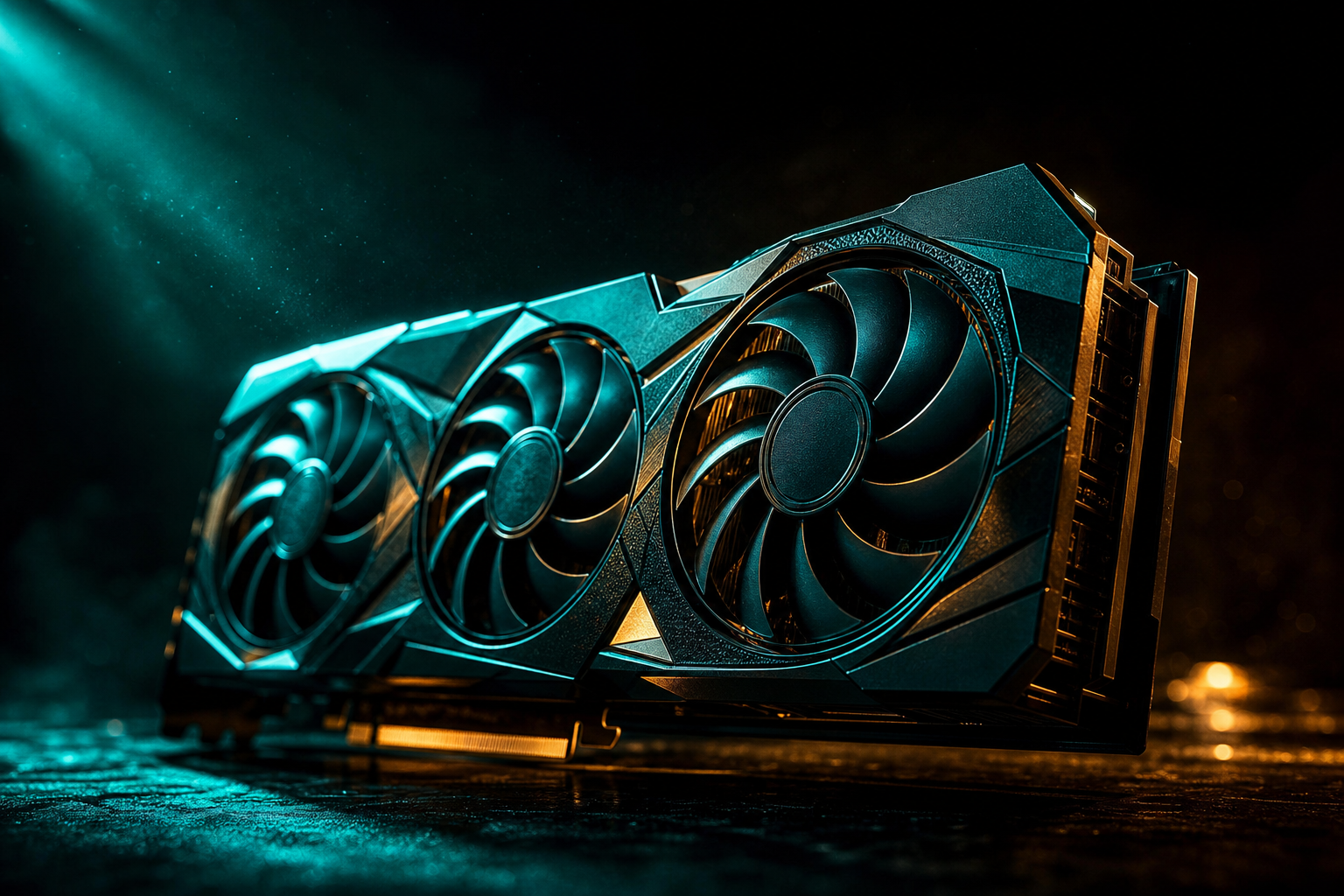
The RTX 5090 launched at $2,000 MSRP in January 2025, but as of October 2026, finding one at that price remains nearly impossible. Meanwhile, system integrators are shipping complete prebuilts with the 5090 for $3,800–$4,200. The math has flipped: during this shortage cycle, buying a prebuilt is no longer the expensive fallback — it's often the only way to actually game on a 5090 before 2027.
This post compares the real cost of a $4,000 RTX 5090 prebuilt versus waiting 3–6 months for MSRP stock, then building yourself. We'll show FPS-per-dollar breakdowns at 4K, component markup comparisons, and the hidden costs of the wait. If you need a free playbook optimized for your exact GPU, run one after you decide which route makes sense.
Current RTX 5090 Availability Reality
NVIDIA's RTX 5090 remains supply-constrained 22 months after launch. Retailer drops sell out in under 90 seconds, and most units go to bots or bundle purchases. Scalper prices on resale markets sit between $2,900 and $3,400 — a 45–70% markup over MSRP. The official NVIDIA queue is paused, and third-party retailers like Newegg and Best Buy restock every 2–4 weeks with single-digit quantities per store.
System integrators, by contrast, receive dedicated allocation. Origin PC, NZXT, Maingear, and iBuyPower all have 5090-equipped builds shipping within 2–3 weeks as of October 2026. This allocation priority is standard during GPU shortages: manufacturers ensure prebuilt partners get cards so complete systems keep moving, even when standalone GPU sales are frozen.
Allocation Economics
Prebuilt Cost Breakdown: What You Actually Get
A typical $4,000 RTX 5090 prebuilt from NZXT or iBuyPower in October 2026 includes: RTX 5090 (32GB GDDR7), Ryzen 7 9800X3D or Core Ultra 9 285K, 32GB DDR5-6000, 2TB PCIe 5.0 NVMe SSD, 850W 80+ Gold PSU, ATX case with RGB and mesh airflow, Windows 11 Pro, and 1–2 year warranty with support. That's a complete, ready-to-game system with no assembly required.
Component-by-component, if you sourced these parts at MSRP today, the total would be roughly $3,300–$3,500. But here's the critical point: you CAN'T source the 5090 at MSRP. If you're buying from a scalper at $3,200, then adding a $600 CPU, $150 RAM, $250 SSD, $180 PSU, $120 case, and $140 Windows license, you're at $4,640 before tax. The prebuilt undercuts that by $600–$800.
- RTX 5090 (scalper price): $3,200
- Ryzen 7 9800X3D: $600
- 32GB DDR5-6000: $150
- 2TB PCIe 5.0 SSD: $250
- 850W PSU (80+ Gold): $180
- ATX case: $120
- Windows 11 Pro: $140
- Total if building with scalped GPU: $4,640
FPS-per-Dollar at 4K: Does the Prebuilt Tax Hurt?
The RTX 5090 delivers measured averages of 165 FPS in Cyberpunk 2077 at 4K Ultra (DLSS Quality), 220 FPS in Warzone at 4K High, and 140 FPS in Black Myth: Wukong at 4K Very High with frame generation. At $4,000 for the complete prebuilt, that's 24 cents per average FPS in the heaviest title (Wukong). For comparison, a $2,800 prebuilt with an RTX 4090 (last-gen, still in stock) runs about 110 FPS in Wukong 4K — 25 cents per FPS.
If you wait 4 months and snag a 5090 at MSRP, then build the same spec for $3,400 total, your cost per FPS drops to 24 cents (identical to the prebuilt). The prebuilt isn't more expensive per frame — it's immediate availability at the same effective rate. The only scenario where building wins financially is if you ALREADY own a modern CPU/RAM/PSU and only need the GPU upgrade, cutting your incremental cost to roughly $2,000. But most buyers considering a 5090 are doing a full build or replacing a 3–4 year old system.
The Hidden Costs of Waiting for MSRP Stock
Waiting 3–6 months for MSRP availability carries real costs beyond the sticker price. If you're gaming on an older GPU (RTX 3080, RX 6800 XT), you're locked at lower settings or resolution for hundreds of hours. A 3080 runs Cyberpunk 2077 at roughly 70 FPS at 4K Medium (DLSS Balanced) — half the performance of a 5090. Over 300 hours of play (a single AAA campaign plus multiplayer), that's 300 hours of compromised experience you can't get back.
There's also opportunity cost in competitive games. High-refresh 4K (144Hz+) is the current standard for esports and AAA multiplayer, and a 5090 is the first GPU to consistently deliver native 144+ FPS at 4K High in titles like Warzone, Apex Legends, and Valorant without upscaling. If you're waiting until Q1 2027 for MSRP stock, you're spending another season playing at 1440p or with heavy upscaling, which changes visibility and input lag.
Scalper Risk
Prebuilt Quality Concerns: Not What They Used to Be
The reputation of prebuilts as corner-cutting builds with proprietary parts is outdated. Tier-1 integrators like NZXT, Maingear, and Origin PC use standard ATX components — off-the-shelf motherboards, RAM, and PSUs you could swap or upgrade yourself. Proprietary boards and locked BIOS were common in 2018–2020 (especially from Dell/HP), but that's rare in the gaming prebuilt segment now.
Cable management and airflow quality vary by builder. NZXT and Maingear ship clean builds with proper fan curves and front-to-back airflow. Budget integrators (sub-$3k builds) sometimes skimp on case fans or use single-channel RAM, but at the $4k tier, those issues are uncommon. Check the full spec sheet before buying: confirm dual-channel RAM config, sufficient case fans (3+ intake/exhaust), and an 80+ Gold or better PSU with enough headroom (850W minimum for a 5090 system).
RAM Upgrade Trap
When Building Still Wins
Building yourself makes sense in three scenarios. First, if you already own a modern platform (AM5 or LGA1851 motherboard, 32GB DDR5, 850W+ PSU) and only need the GPU — your incremental cost is just the 5090 itself, which is $2,000 at MSRP versus $4,000 for a redundant full build. Second, if you have specific aesthetic or cooling requirements that prebuilts don't offer (custom loop watercooling, Mini-ITX SFF, or exact case/RGB choices). Third, if you're willing to wait until Q2 2027 or later for the shortage to ease and MSRP stock to stabilize.
For everyone else — new builders, upgraders from 3+ year old systems, or anyone who wants to game in the next month — the prebuilt is the rational play in October 2026. The effective cost per FPS is identical to MSRP building, the warranty coverage is better than scalper risk, and you're gaming now instead of refreshing Newegg stock alerts for six months.
Once you have your 5090 system (prebuilt or custom), run a free hardware-specific playbook at BetterFPS to dial in game settings for your exact config. The 5090's 32GB VRAM and DLSS 4 multi-frame generation unlock settings combinations that don't work on other GPUs — our optimizer accounts for that and generates per-game configs in under a minute.