Best Streaming & Gaming Microphones in 2026
Audio quality is the single fastest way to make your stream feel professional. A good microphone cuts through game audio, eliminates background noise, and makes your voice sound clear without any post-processing. We compared USB and XLR mics across price points to find the best options for every setup.
Updated May 2026. Prices are approximate. BetterFPS earns a commission on qualifying Amazon purchases at no extra cost to you.
| Award | Name | Type | Connection | Polar Pattern | Sample Rate | Price |
|---|---|---|---|---|---|---|
| Best USB Overall | Rode NT-USB+ | Condenser | USB-C | Cardioid | 24-bit / 48 kHz | $169 |
| Best XLR | Shure SM7B | Dynamic | XLR | Cardioid | Analog (interface-dependent) | $399 |
| Best Budget USB | Fifine AmpliGame A8 | Dynamic | USB-C | Cardioid | 24-bit / 48 kHz | $36 |
| Best for Streaming | Elgato Wave:3 | Condenser | USB-C | Cardioid | 24-bit / 96 kHz | $150 |
| Best Compact | Shure MV6 | Dynamic | USB-C | Cardioid | 24-bit / 48 kHz | $99 |
| Best Dynamic | Shure MV7+ | Dynamic | USB-C + XLR (hybrid) | Cardioid | 24-bit / 48 kHz (USB) | $279 |
| Best Condenser | Audio-Technica AT2020USB-X | Condenser | USB-C | Cardioid | 24-bit / 96 kHz | $129 |
| Best Wireless | HollyLand Lark M2 | Condenser (MEMS) | 2.4 GHz wireless + USB-C receiver | Omnidirectional | 24-bit / 48 kHz | $149 |
| Best Boom Arm Bundle | Rode PodMic USB | Dynamic | USB-C + XLR (hybrid) | Cardioid | 24-bit / 48 kHz (USB) | $179 |
| Best Value | Logitech Blue Yeti X | Condenser (quad-capsule) | USB (Micro-B) | Cardioid, Omni, Bidirectional, Stereo | 24-bit / 48 kHz | $109 |
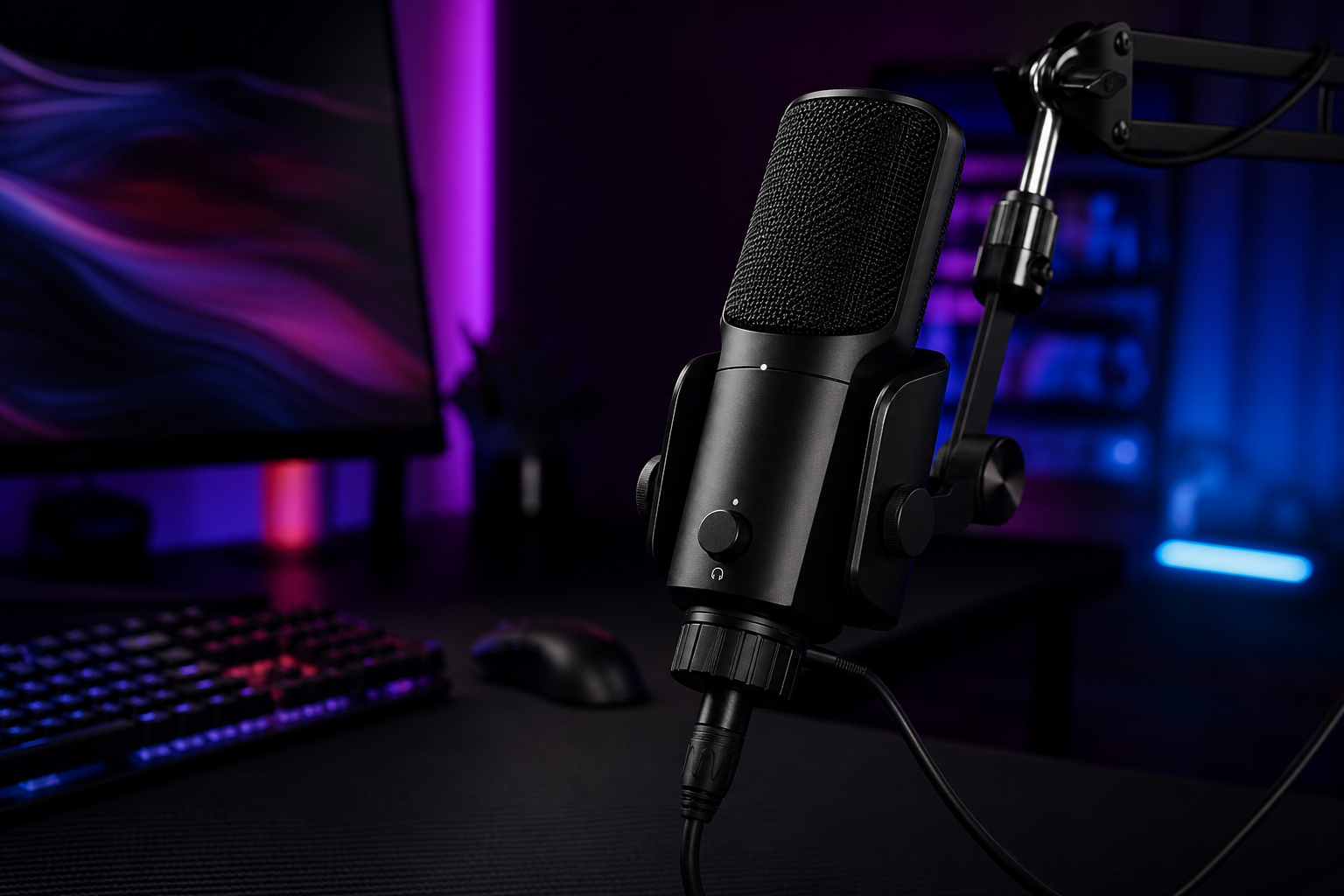
Rode NT-USB+
Streamers who want broadcast-quality USB audio with zero configuration required.
- +Studio-grade sound quality rivaling entry-level XLR setups
- +Built-in DSP with Rode Connect and Rode Central apps
- +Included pop filter and desk stand in the box
- +Headphone jack with zero-latency monitoring
- -Large footprint on a desk without a boom arm
- -Condenser element picks up room noise in untreated spaces
- -Premium price for a USB microphone
The NT-USB+ is the best-sounding USB microphone you can buy. Rode's internal DSP handles noise reduction and compression without external software, and the audio quality genuinely competes with XLR setups costing twice as much.
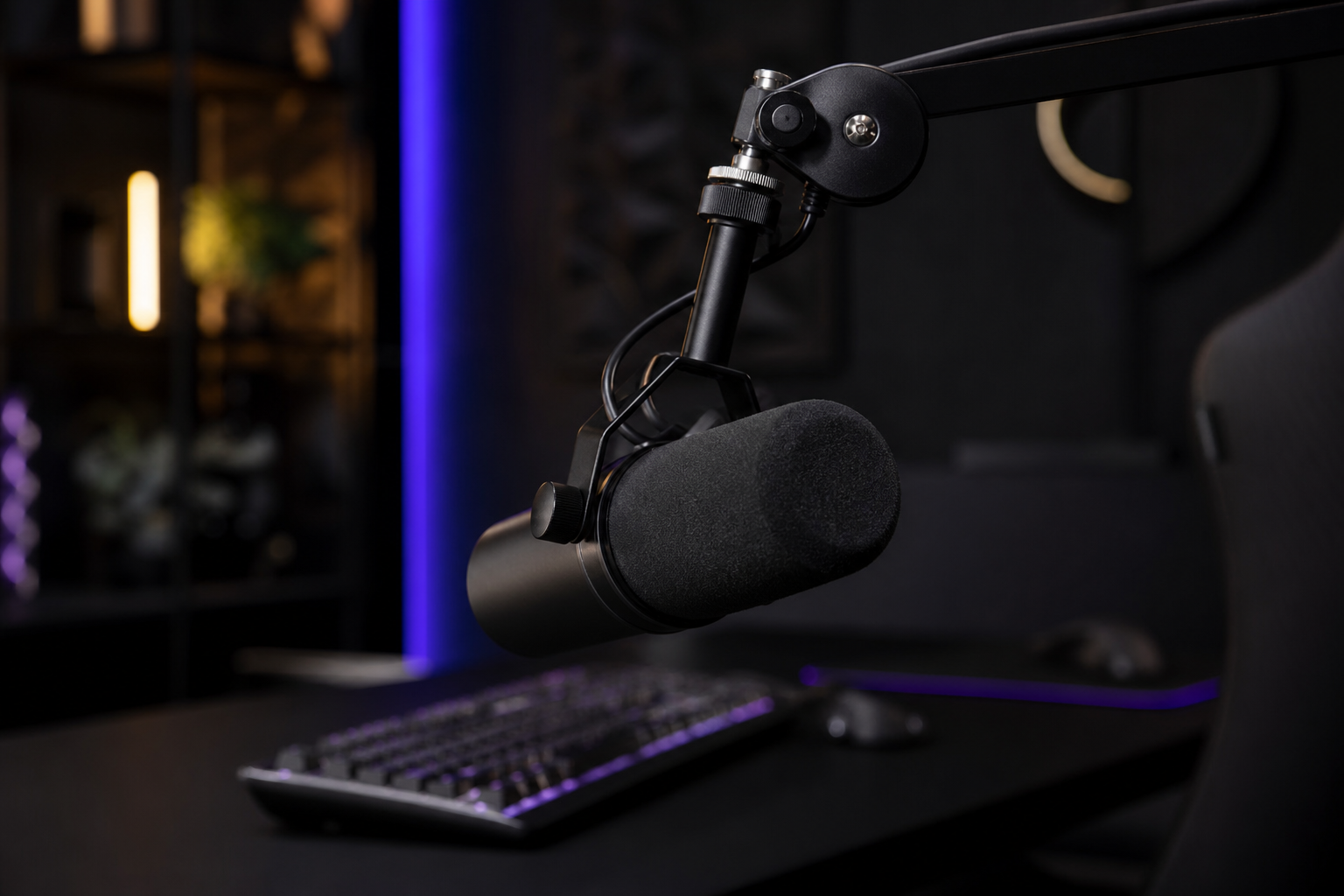
Shure SM7B
Serious streamers and podcasters who want the industry-standard broadcast dynamic mic.
- +The standard for broadcast vocals — used by top podcasters and streamers worldwide
- +Exceptional background noise rejection for untreated rooms
- +Built-in electromagnetic shielding eliminates hum from monitors
- +Indestructible build quality that lasts decades
- -Requires an audio interface with high gain (CloudLifter recommended)
- -Expensive when you add the interface and boom arm costs
- -Must be positioned very close to your mouth (2-4 inches)
The SM7B is the microphone you see behind every major streamer and podcaster for a reason. Its noise rejection is legendary, and it makes any voice sound rich and professional. Budget for a CloudLifter or high-gain interface.
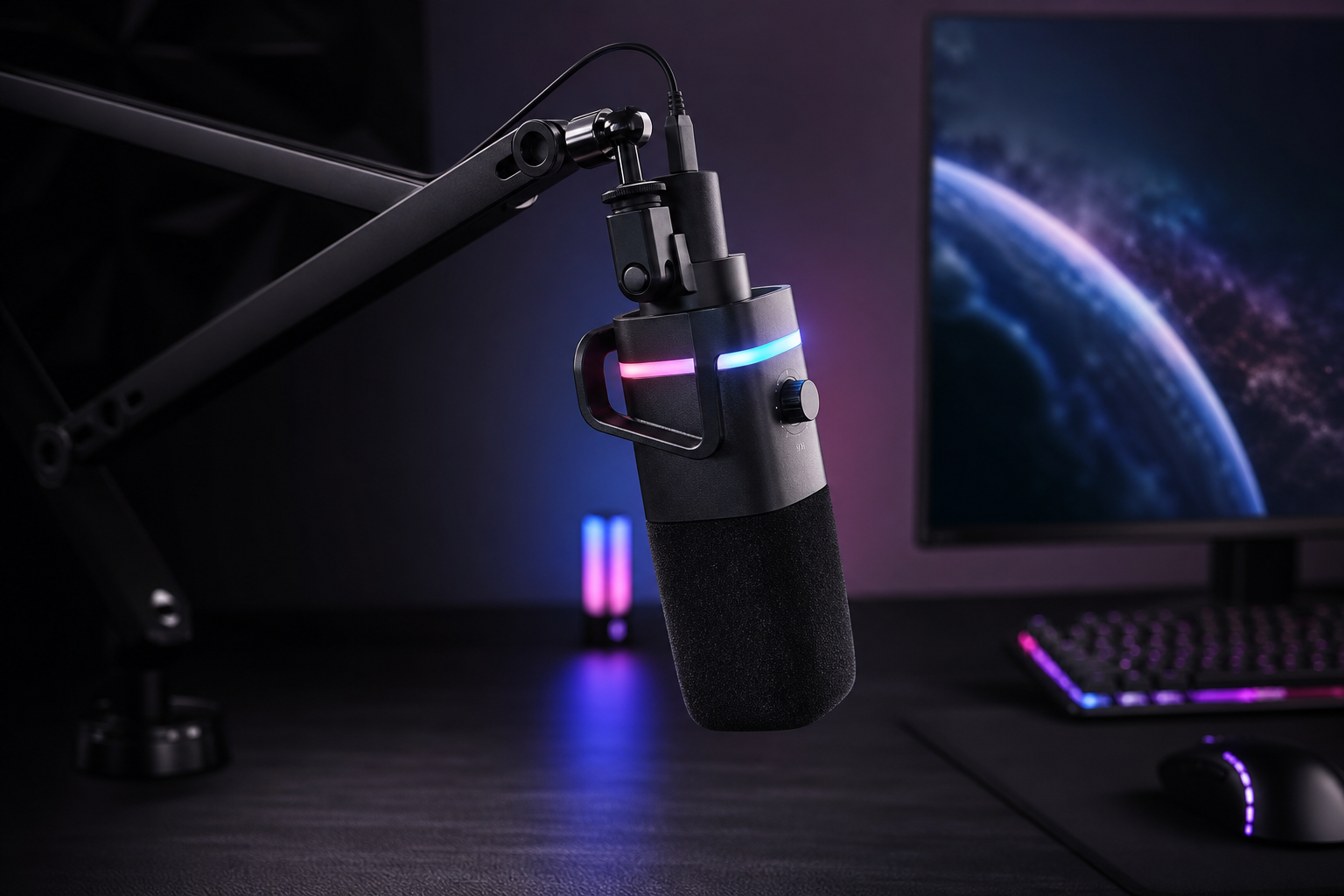
Fifine AmpliGame A8
Budget streamers who want dynamic noise rejection and USB convenience at a fraction of the cost.
- +Dynamic capsule rejects keyboard and background noise naturally
- +USB-C plug-and-play — no drivers or software needed
- +Tap-to-mute button on top is genuinely useful while streaming
- +Unbeatable price for a dynamic USB microphone
- -Sound quality is acceptable, not exceptional
- -RGB lighting cannot be fully disabled on some units
- -Build quality is plastic and lightweight
The Fifine A8 proves you do not need to spend $150+ to sound decent on stream. The dynamic element handles noisy environments well, and the tap-to-mute is a feature that even premium mics sometimes lack. A steal at this price.
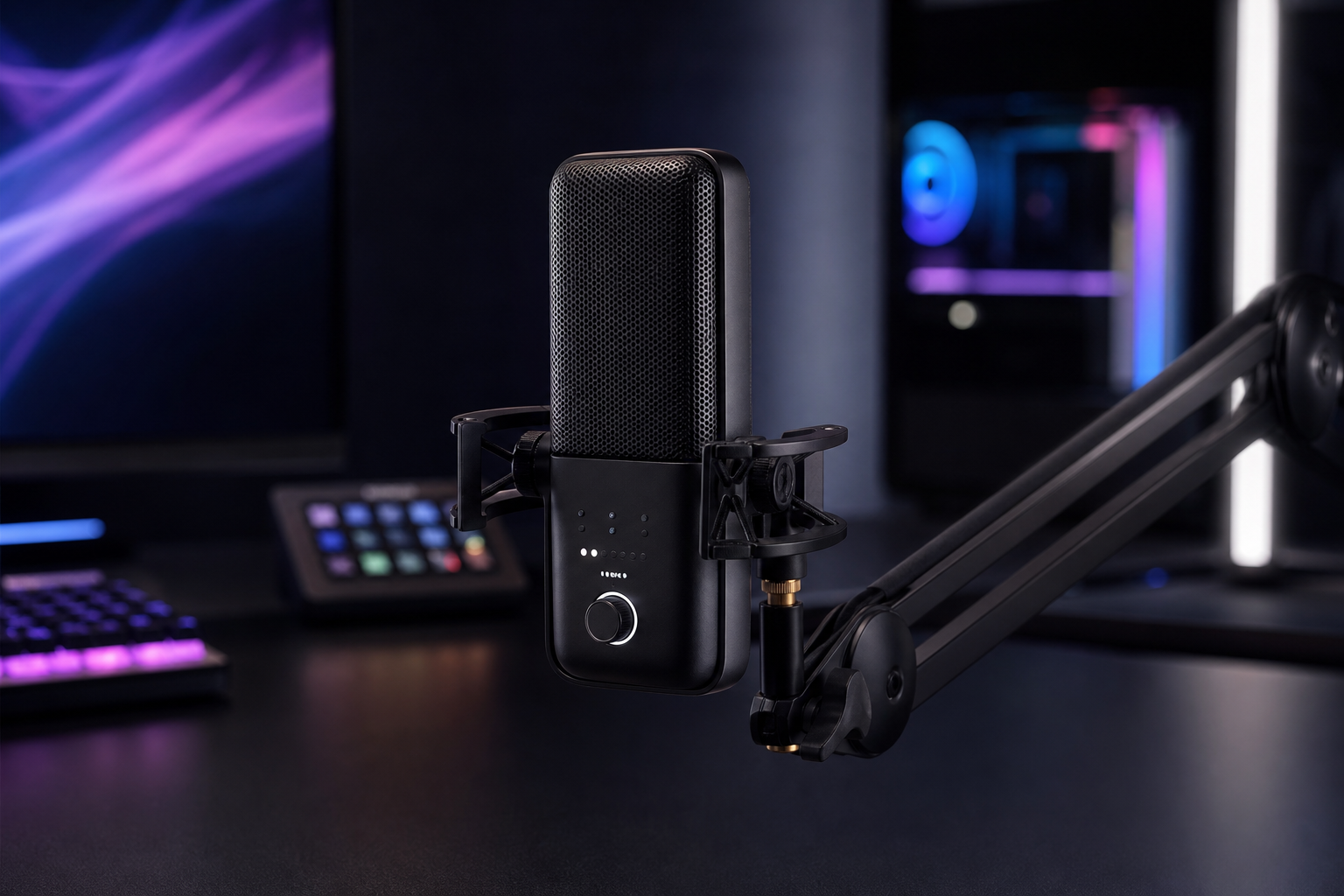
Elgato Wave:3
Streamers who want deep software integration with OBS and Elgato Stream Deck.
- +Clipguard anti-clipping technology prevents distortion from sudden volume spikes
- +Wave Link virtual mixer routes up to 8 audio channels independently
- +Seamless integration with Stream Deck for on-the-fly audio control
- +Compact form factor fits well on a boom arm
- -Condenser pickup requires a quiet room for best results
- -Wave Link software is Windows-only for full functionality
- -Slightly thin sound compared to Rode or Shure at this price
The Wave:3 is purpose-built for streaming. Clipguard alone justifies the price — it eliminates audio clipping that plagues other condenser mics. If you are already in the Elgato ecosystem, this is the obvious choice.
Shure MV6
Gamers who want Shure quality in a tiny desktop footprint without a boom arm.
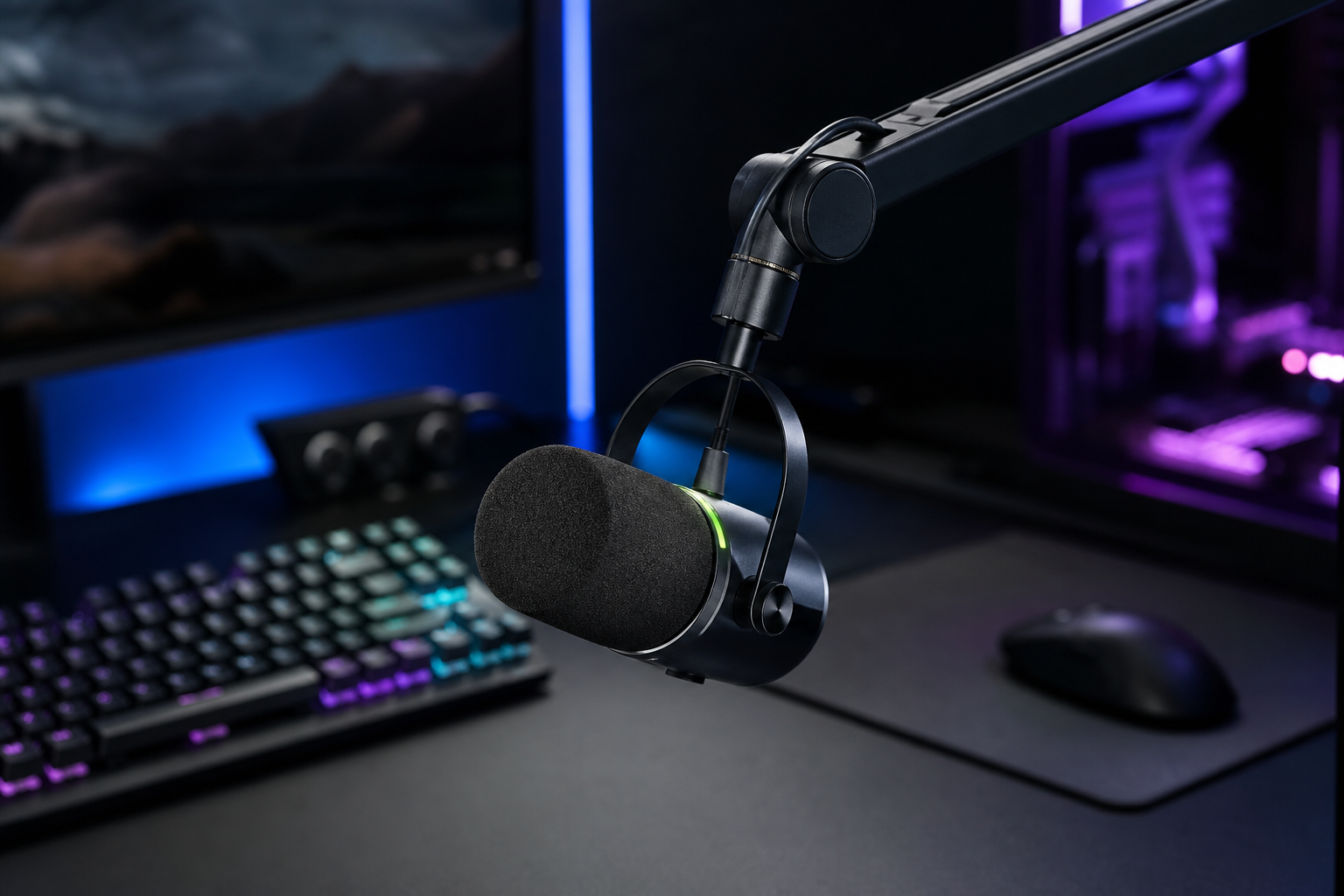
- +Remarkably small — barely visible on camera
- +Dynamic capsule sounds great even at arm's length from your mouth
- +Built-in auto-level keeps volume consistent without touching gain
- +Shure brand quality at under $100
- -Limited volume output compared to larger dynamic mics
- -No headphone monitoring jack on the mic itself
- -Desktop stand is adequate but a boom arm improves results
The MV6 is Shure's answer to the casual gamer market, and it delivers. The auto-level feature means you never need to adjust gain mid-stream, and the compact size keeps it out of your webcam frame. Brilliant engineering at this price.
Shure MV7+
Streamers who want SM7B-like performance with USB convenience and room to grow into XLR.
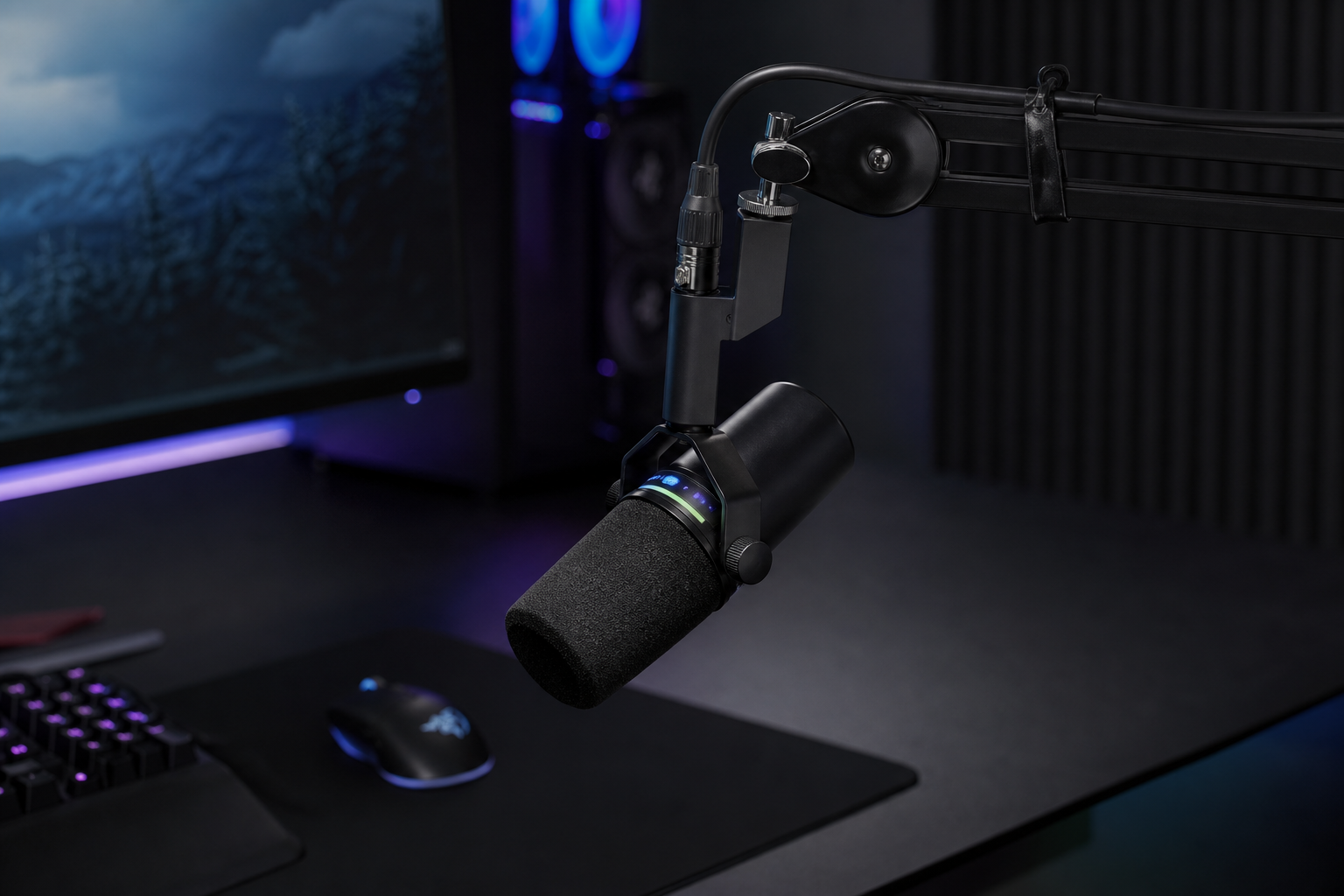
- +Hybrid USB/XLR means you can start with USB and upgrade later
- +Excellent background noise rejection in noisy environments
- +Built-in DSP with app-controlled EQ, compression, and limiter
- +LED touch panel for gain and monitoring adjustments
- -XLR output still needs a quality interface for best results
- -Heavier than most USB mics — needs a sturdy boom arm
- -Premium price for a USB mic, budget price for XLR quality
The MV7+ bridges the USB-to-XLR gap perfectly. Start with USB out of the box, then add an interface when you are ready for the next level. The sound quality punches well above its price in both modes.
Audio-Technica AT2020USB-X
Streamers in quiet, treated rooms who want the richest, most detailed vocal capture.
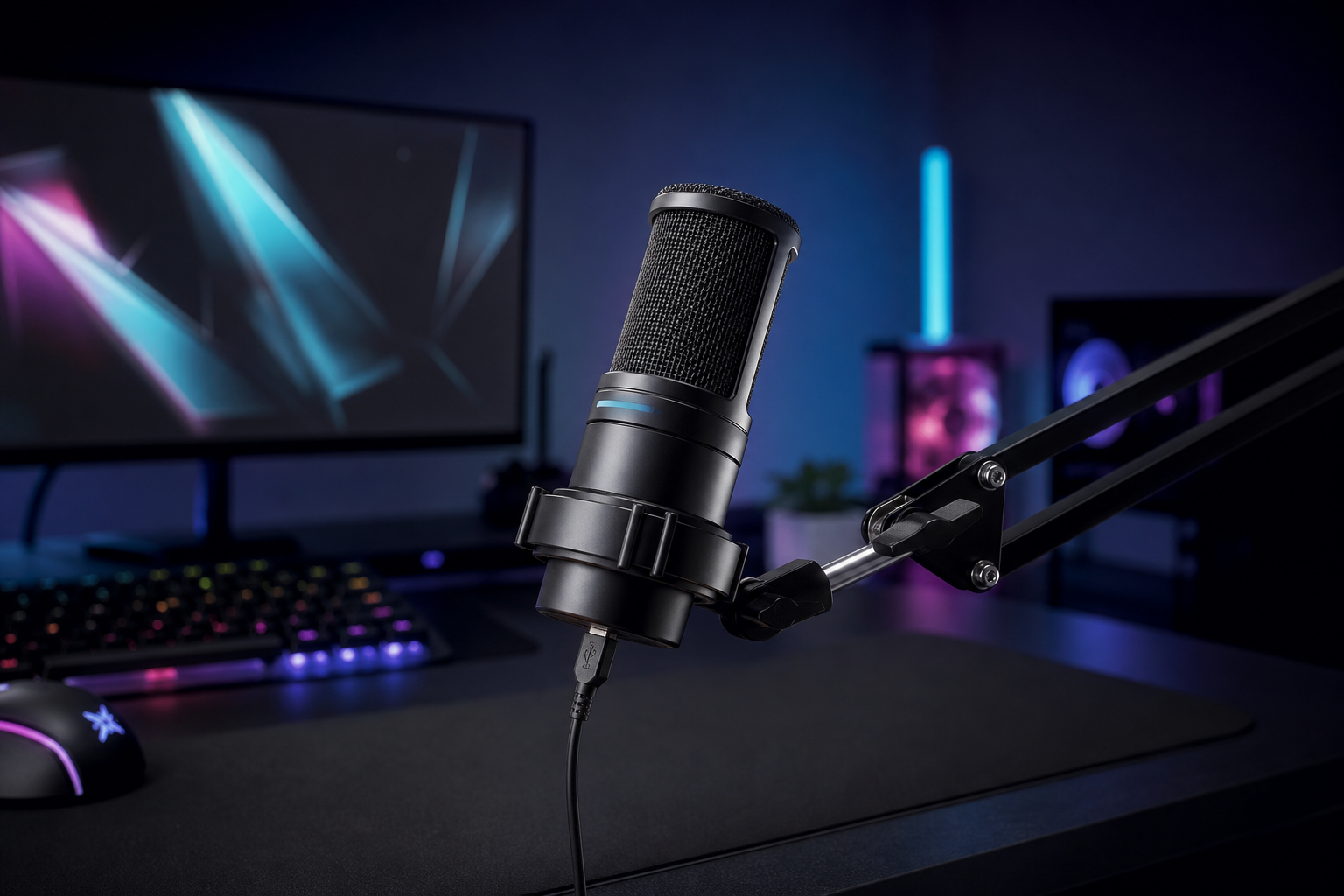
- +Best-in-class condenser detail and vocal richness at this price
- +High-quality A/D converter for clean, artifact-free recording
- +Mix control blends mic input and computer audio in headphones
- +All-metal construction that feels genuinely premium
- -Extremely sensitive — picks up every sound in the room
- -Needs a shock mount to avoid handling and desk vibrations
- -No built-in noise gate or DSP — relies on software processing
The AT2020USB-X is a genuine studio condenser with a USB plug. If your room is treated or quiet, nothing at this price will make your voice sound as rich and detailed. A classic choice refreshed with modern connectivity.
HollyLand Lark M2
IRL streamers and mobile content creators who need freedom from cables.
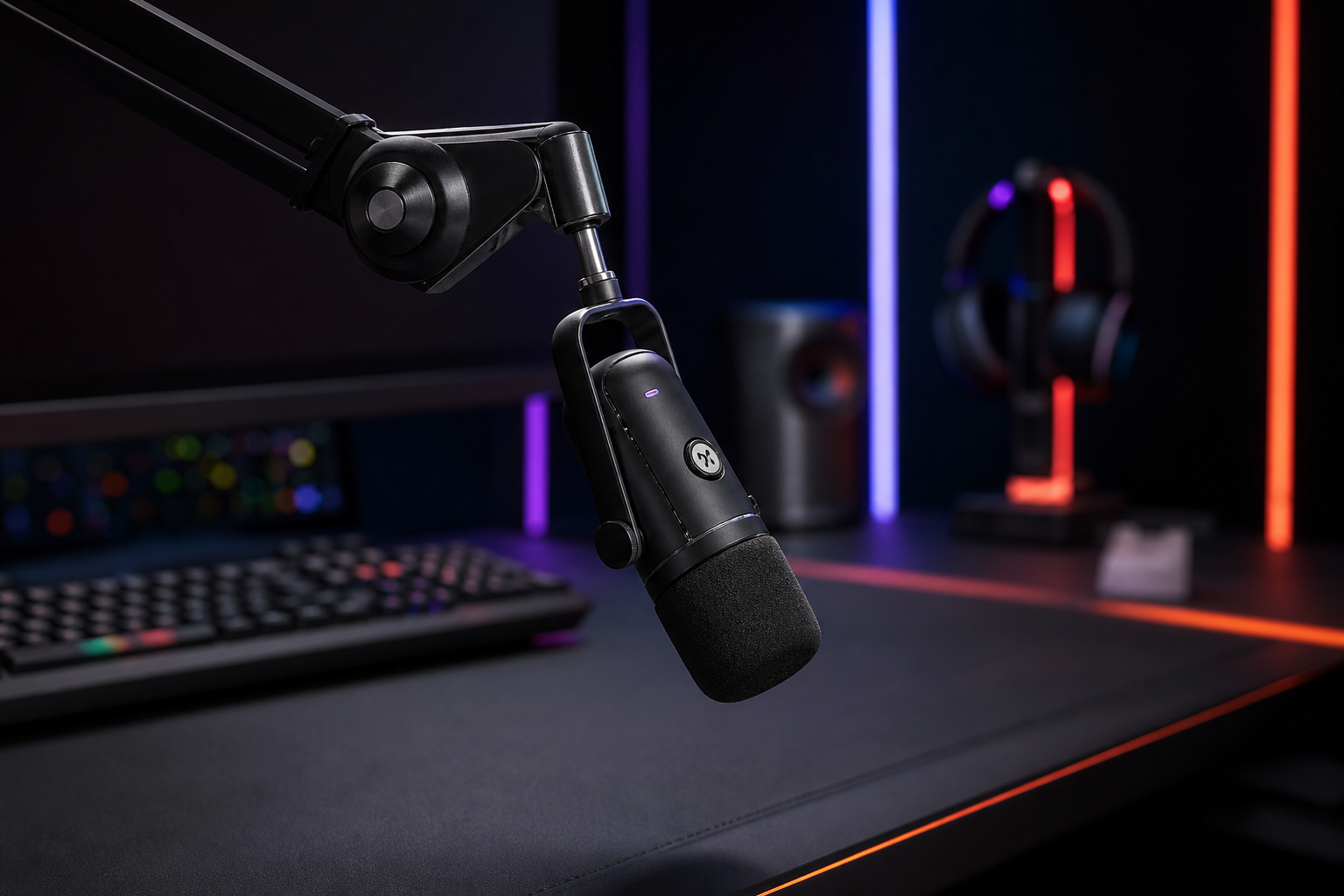
- +Clip-on transmitters weigh almost nothing and are nearly invisible
- +Dual-channel system captures two people simultaneously
- +Active noise cancellation handles outdoor wind and ambient noise
- +1000-foot range covers any IRL streaming scenario
- -Sound quality is good but not desktop-mic level
- -Omnidirectional pickup means it catches more ambient noise indoors
- -Battery lasts about 9 hours — fine for streams, tight for all-day use
The Lark M2 is the best wireless option for streamers who cannot be tethered to a desk. The dual-transmitter system is perfect for co-streams and interviews, and the noise cancellation handles real-world environments surprisingly well.
Rode PodMic USB
Podcasters and streamers who want a broadcast-ready mic that includes everything for boom arm mounting.
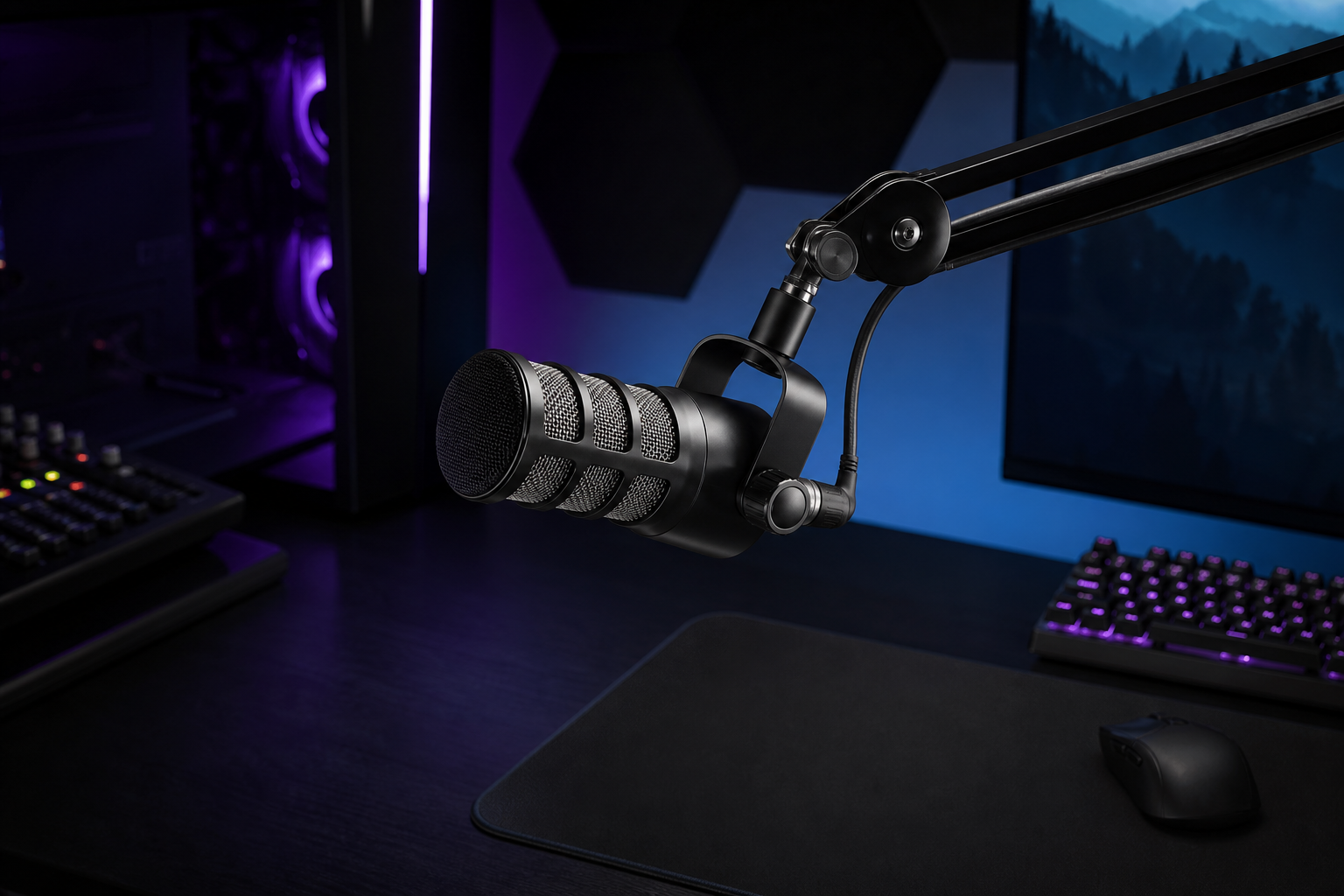
- +End-address design is perfect for boom arm positioning
- +Hybrid USB/XLR future-proofs your investment
- +Internal pop filter eliminates the need for an external screen
- +Swing mount adapter fits any standard boom arm out of the box
- -Heavy at 937g — needs a sturdy boom arm (Rode PSA1+ recommended)
- -Must be within 6 inches of your mouth for best dynamic performance
- -Matte black finish shows fingerprints easily
The PodMic USB is built from the ground up for boom arm use. The end-address design, internal pop filter, and swing mount adapter mean you are recording within minutes. The hybrid connectivity is the cherry on top.
Logitech Blue Yeti X
Content creators who need multi-pattern flexibility and proven reliability at a mid-range price.
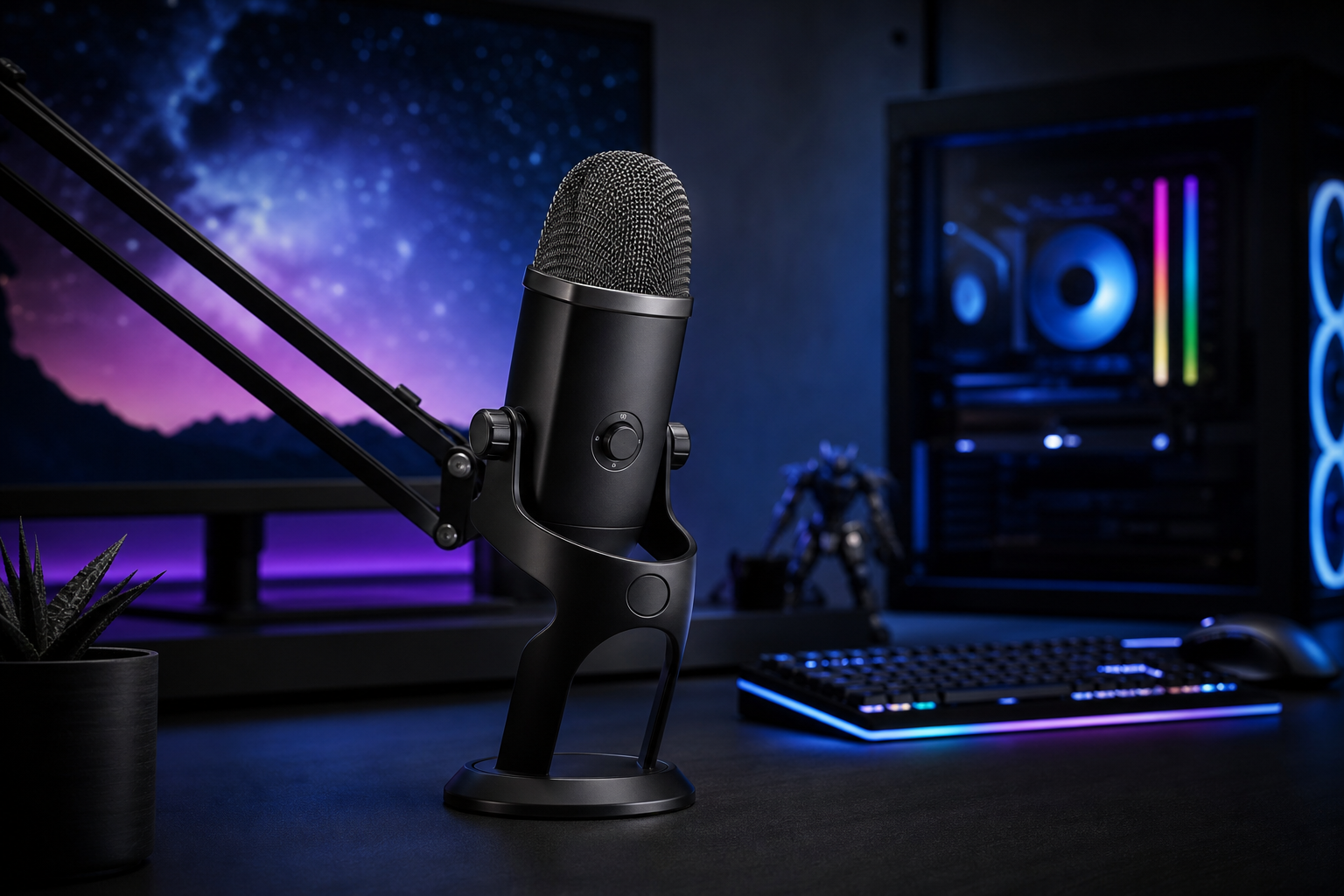
- +Four polar patterns cover streaming, podcasting, interviews, and ASMR
- +Real-time LED metering on the mic body shows input levels at a glance
- +Blue VO!CE effects and presets are genuinely useful for beginners
- +Proven track record with years of community support and guides
- -Micro-USB connector feels dated in 2026
- -Heavy and large — dominates any desk setup without a boom arm
- -Condenser quad-capsule picks up significant room noise
The Yeti X remains the Swiss Army knife of USB microphones. No other mic at this price offers four polar patterns, real-time metering, and a companion software suite. It does everything well enough for most creators.
How to pick the right streaming microphones
USB vs. XLR: Which Do You Actually Need?
USB microphones plug directly into your PC and work immediately. XLR microphones require an audio interface ($100+) but offer superior sound quality and upgrade flexibility. For most streamers, USB is the right choice until you outgrow it.
Dynamic vs. Condenser
Dynamic mics reject background noise naturally and sound great up close. Condenser mics capture more detail and richness but pick up everything in the room. If you stream in a noisy environment without acoustic treatment, go dynamic.
Polar Patterns Explained
Cardioid picks up sound from the front and rejects sides/rear — ideal for solo streaming. Omnidirectional captures everything equally. Most streamers want cardioid. Multi-pattern mics add flexibility for podcasts and interviews.
Placement and Boom Arms
Get your mic 6-12 inches from your mouth for the best sound. A boom arm is almost mandatory — desk stands pick up vibrations from typing and mouse clicks. Budget $30-50 for a decent arm.
Built-in DSP and Software
Many modern USB mics include onboard noise gates, compression, and EQ. This can eliminate the need for software like VoiceMeeter or OBS filters. Shure and Elgato lead here with excellent companion apps.