Best Gaming SSDs in 2026
Load times, texture streaming, and DirectStorage all depend on your SSD. We compared drives on sequential speed, random IOPS, published game load-time results, and price to find the 10 SSDs that actually make a difference. Every pick below is an NVMe M.2 drive unless noted — SATA SSDs are too slow for modern gaming.
Updated May 2026. Prices are approximate. BetterFPS earns a commission on qualifying Amazon purchases at no extra cost to you.
| Award | Name | Interface | Capacity | Read Speed | Write Speed | DRAM Cache | Endurance | Price |
|---|---|---|---|---|---|---|---|---|
| Best NVMe Gen5 | WD Black SN8100 | PCIe 5.0 x4, NVMe 2.0 | 2TB | 12,000 MB/s | 10,000 MB/s | Yes (LPDDR4) | 1,200 TBW | $200–$230 |
| Best NVMe Gen4 | Samsung 990 Pro | PCIe 4.0 x4, NVMe 2.0 | 2TB | 7,450 MB/s | 6,900 MB/s | Yes (LPDDR4) | 1,200 TBW | $150–$180 |
| Best Gen4 Value | WD Black SN850X | PCIe 4.0 x4, NVMe 1.4 | 2TB | 7,300 MB/s | 6,600 MB/s | Yes (DDR4) | 1,200 TBW | $110–$140 |
| Best 2TB | Samsung 990 Pro 4TB | PCIe 4.0 x4, NVMe 2.0 | 4TB | 7,450 MB/s | 6,900 MB/s | Yes (LPDDR4) | 2,400 TBW | $280–$330 |
| Best 4TB | Corsair MP700 Pro XT | PCIe 5.0 x4, NVMe 2.0 | 4TB | 12,400 MB/s | 11,800 MB/s | Yes (LPDDR4) | 3,000 TBW | $400–$450 |
| Best Budget 1TB | Kioxia Exceria Plus G3 | PCIe 4.0 x4, NVMe 1.4 | 1TB | 5,000 MB/s | 3,900 MB/s | Yes (LPDDR4) | 600 TBW | $55–$70 |
| Best for PS5 | WD Black SN850P | PCIe 4.0 x4, NVMe 1.4 | 2TB | 7,300 MB/s | 6,600 MB/s | Yes (DDR4) | 1,200 TBW | $120–$150 |
| Best Portable | Samsung T9 Portable SSD | USB 3.2 Gen 2x2 (Type-C) | 2TB | 2,000 MB/s | 1,950 MB/s | N/A (External) | N/A (External) | $180–$230 |
| Best DRAM-less | WD Blue SN580 | PCIe 4.0 x4, NVMe 1.4 | 2TB | 4,150 MB/s | 4,150 MB/s | No (HMB) | 900 TBW | $85–$105 |
| Best Overall Value | Kingston Fury Renegade G5 | PCIe 5.0 x4, NVMe 2.0 | 2TB | 10,000 MB/s | 9,500 MB/s | Yes (LPDDR4) | 2,000 TBW | $170–$200 |
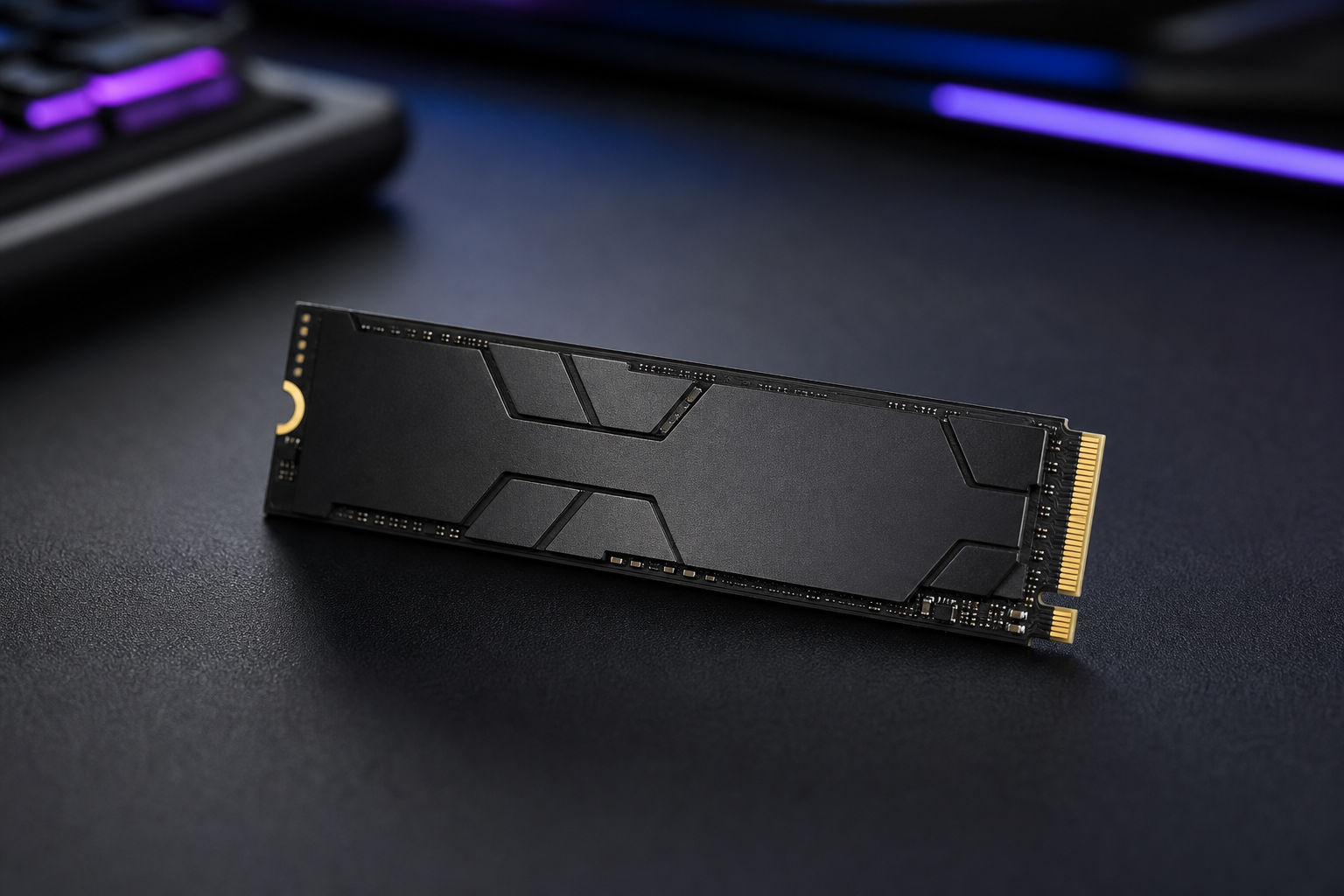
WD Black SN8100
Content creators and power users who need the fastest sequential speeds available.
- +The fastest SSD in independent benchmarks as of early 2026
- +12,000 MB/s reads make large file transfers and video editing noticeably faster
- +DRAM-equipped for strong random read performance
- +1,200 TBW endurance is generous for a consumer drive
- -Runs hot — requires a proper heatsink to avoid throttling under sustained writes
- -Gen 5 premium does not translate to meaningfully faster game loads vs Gen 4
The SN8100 is the fastest consumer SSD money can buy right now. If you move large files, edit video, or want absolute peak performance, this is the drive. For gaming alone, the Gen 4 picks below offer 95% of the experience at half the price.
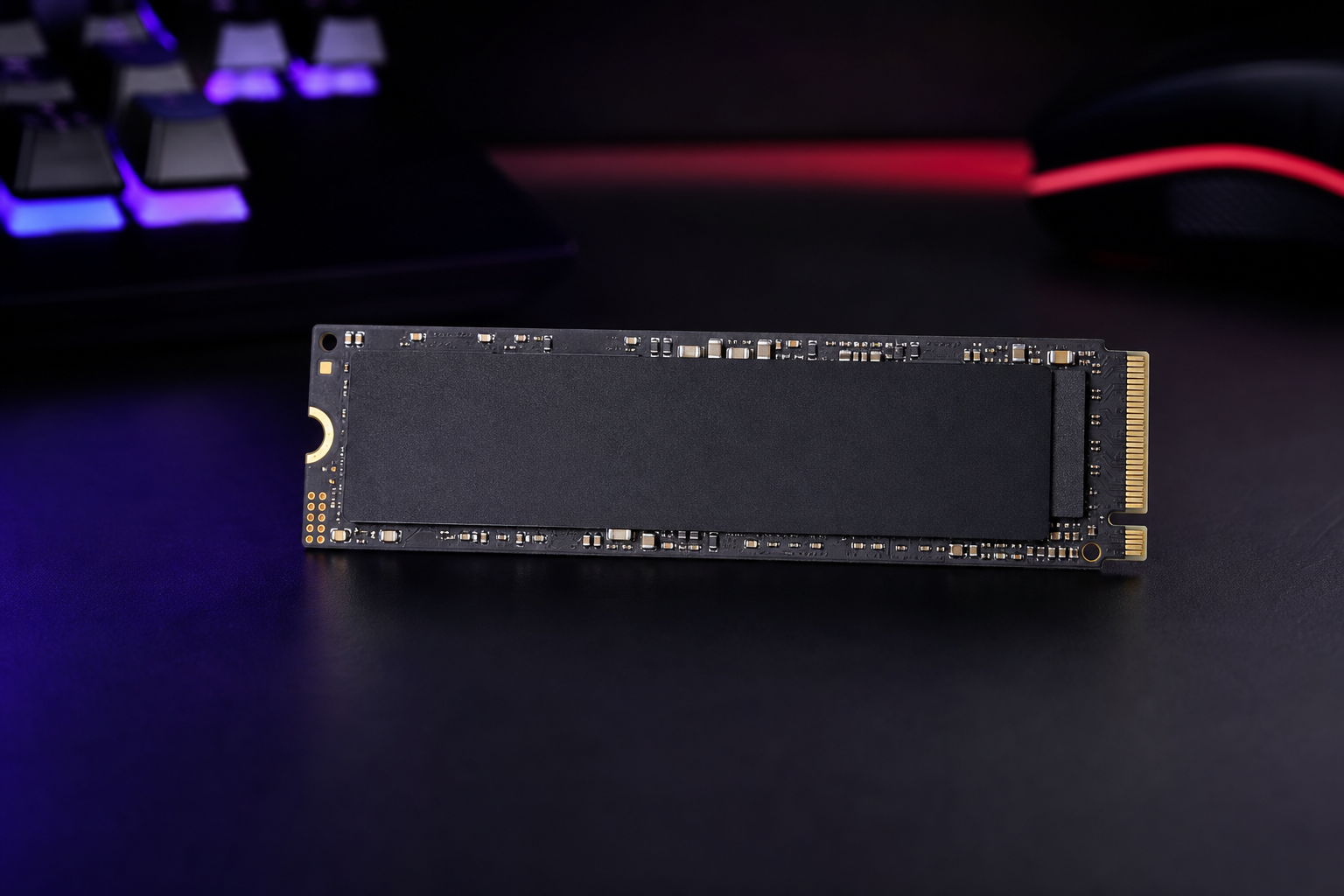
Samsung 990 Pro
The best all-around Gen 4 SSD for gamers who want top-tier reliability and performance.
- +Consistently the fastest Gen 4 drive in real-world benchmarks
- +Samsung's NAND and controller are purpose-built — not off-the-shelf
- +Excellent random IOPS for snappy OS and game responsiveness
- +Samsung Magician software provides drive health monitoring and firmware updates
- -More expensive per TB than competing Gen 4 drives with similar gaming performance
- -Heatsink version adds cost — most motherboards already include one
The 990 Pro is the Gen 4 benchmark. It is the drive other manufacturers compare against, and it consistently delivers the fastest random and sequential speeds in its class. If you want the best Gen 4 SSD and budget is not the primary concern, this is it.
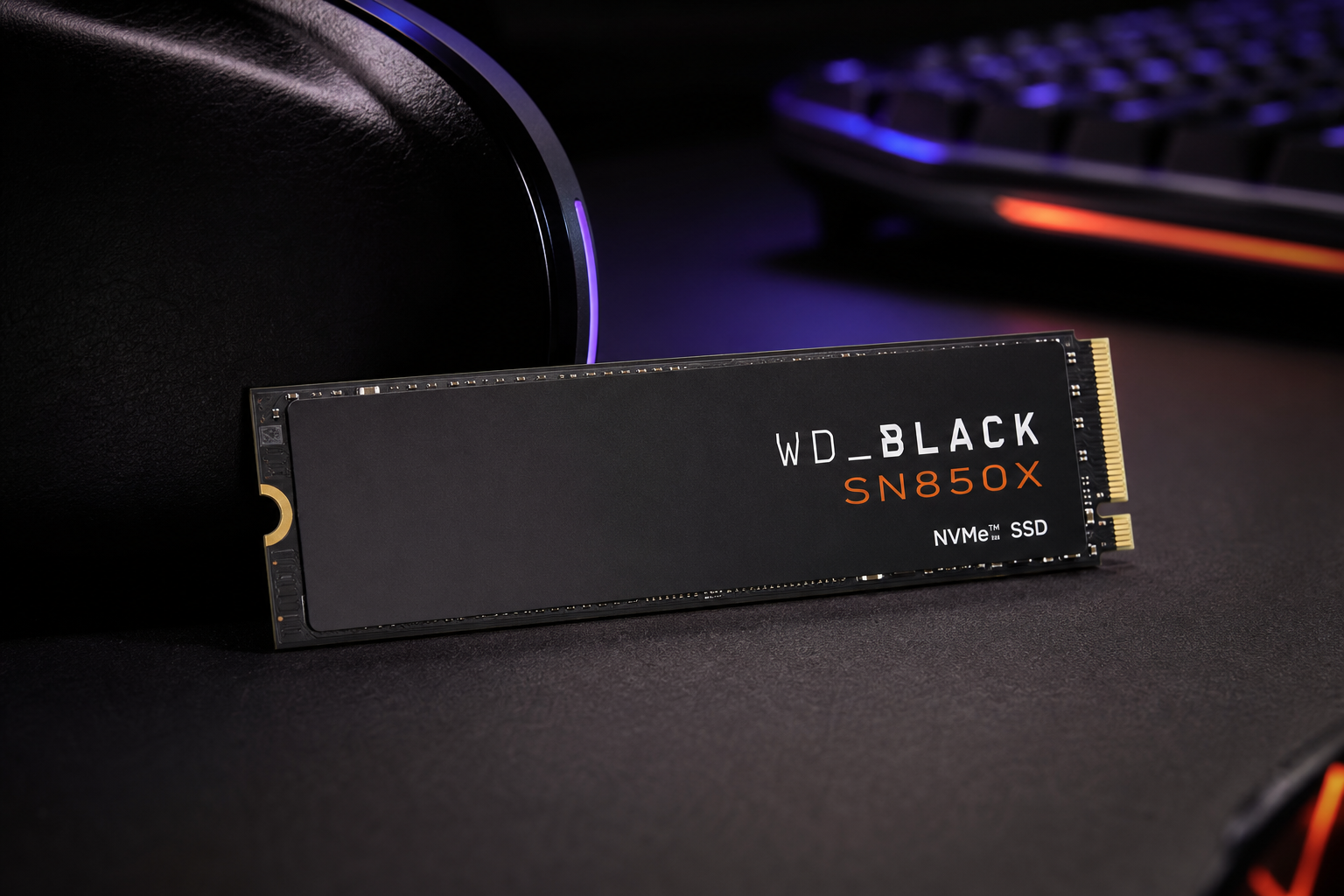
WD Black SN850X
Gamers who want near-990 Pro performance at a meaningfully lower price.
- +Within 2-3% of the Samsung 990 Pro in gaming load times
- +Consistently cheaper than the 990 Pro by $30-50
- +Game Mode 2.0 firmware optimizes for low-latency game loads
- +DRAM-equipped with 1,200 TBW endurance matching premium competition
- -Random write performance is slightly behind the Samsung 990 Pro
- -Dashboard software is less polished than Samsung Magician
The SN850X is the Gen 4 SSD we recommend to most gamers. It delivers 97% of the Samsung 990 Pro experience at a significantly lower price, and WD's reliability track record is rock solid. The best value in high-performance Gen 4 storage.
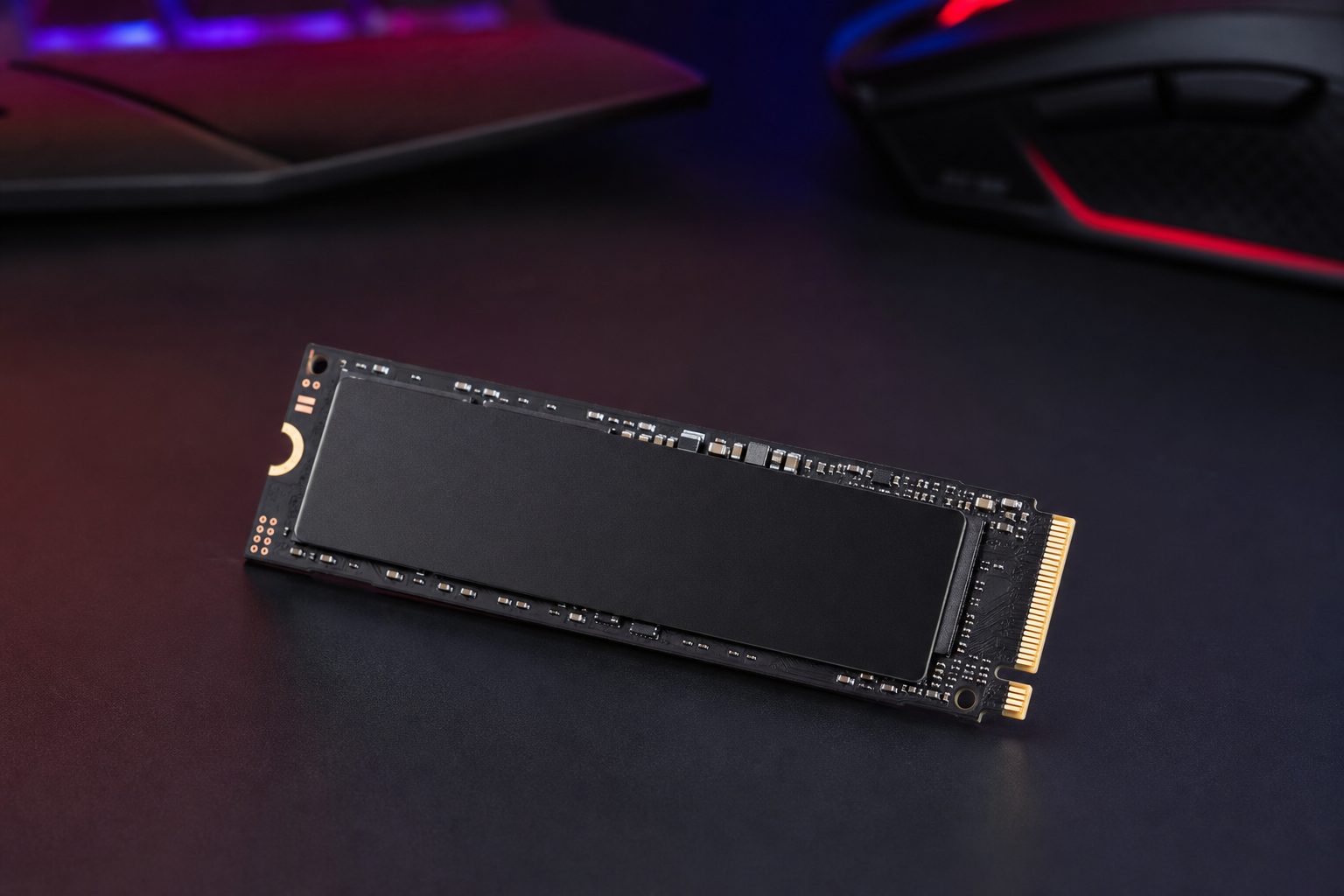
Samsung 990 Pro 4TB
Gamers with large libraries who want top-tier performance without juggling multiple drives.
- +4TB on a single M.2 slot — no need for a second drive
- +Same 7,450 MB/s performance as the 2TB model
- +2,400 TBW endurance scales proportionally with capacity
- +Samsung Magician provides comprehensive health monitoring
- -Costs more than two 2TB budget drives — you pay for the convenience
- -If the single drive fails, you lose everything — backups are essential
If you want one drive to hold your entire game library, the 990 Pro 4TB is the answer. Same top-tier performance, 4TB of space, and Samsung's proven reliability. The per-TB cost is higher than budget alternatives, but the single-slot convenience is worth it.
Corsair MP700 Pro XT
Content creators and no-compromise gamers who want maximum speed and capacity in one slot.
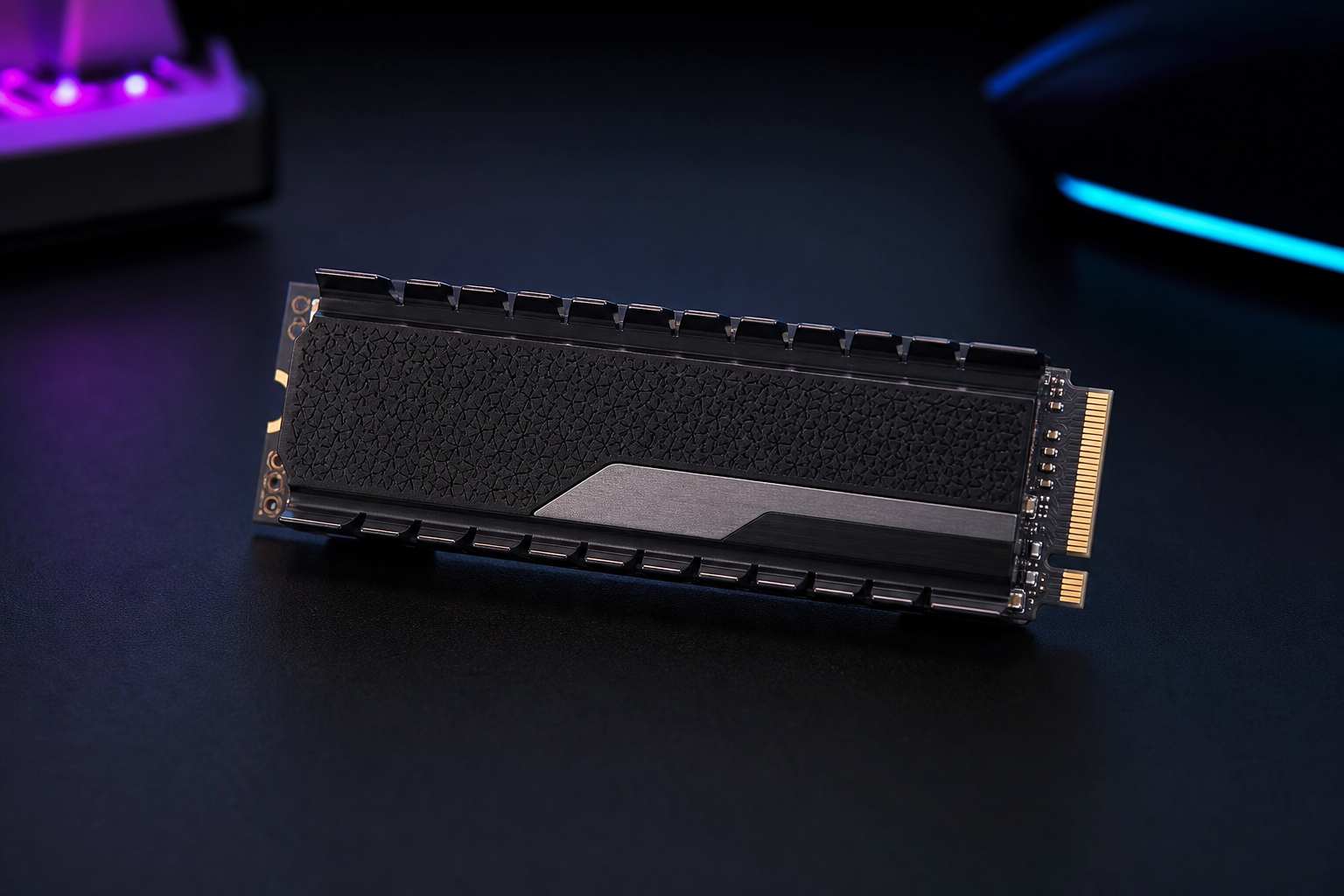
- +Fastest 4TB SSD available with 12,400 MB/s reads
- +3,000 TBW endurance is exceptional for a consumer drive
- +Power efficiency is excellent for a Gen 5 drive — runs cooler than competitors
- +Corsair's toolbox software integrates with iCUE for system-wide monitoring
- -Expensive — the 4TB Gen 5 price premium is steep
- -Still needs a heatsink despite improved power efficiency
The MP700 Pro XT is the drive for users who want everything: Gen 5 speed, 4TB capacity, and top-tier endurance. It is objectively expensive, but if you need this much speed and space in a single M.2 slot, nothing else matches it.
Kioxia Exceria Plus G3
Budget builders who want a DRAM-equipped Gen 4 boot drive under $70.
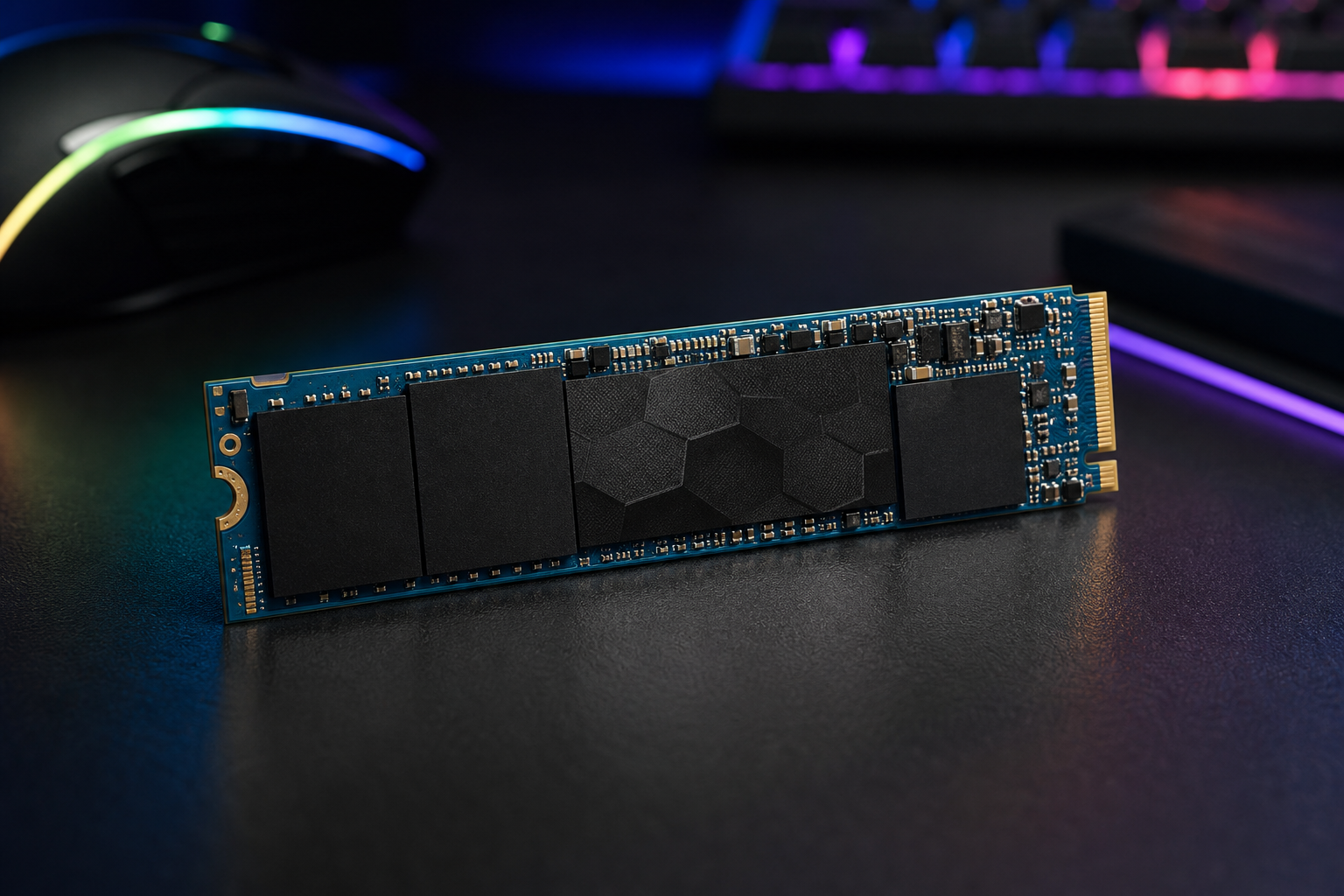
- +DRAM cache at a price where most competitors go DRAM-less
- +Kioxia makes its own NAND — no reliance on third-party components
- +5,000 MB/s reads are fast enough for any gaming workload
- +600 TBW endurance is generous for a budget 1TB drive
- -Sequential write speed drops on large sustained transfers
- -Less brand recognition than Samsung or WD in the consumer space
Kioxia (formerly Toshiba's memory division) makes its own NAND and controller, which lets them undercut the competition on price. The Exceria Plus G3 is a proper DRAM-equipped Gen 4 drive at a price that should not be possible. Excellent as a boot drive or secondary game drive.
WD Black SN850P
PS5 owners who want a plug-and-play storage expansion with a pre-installed heatsink.
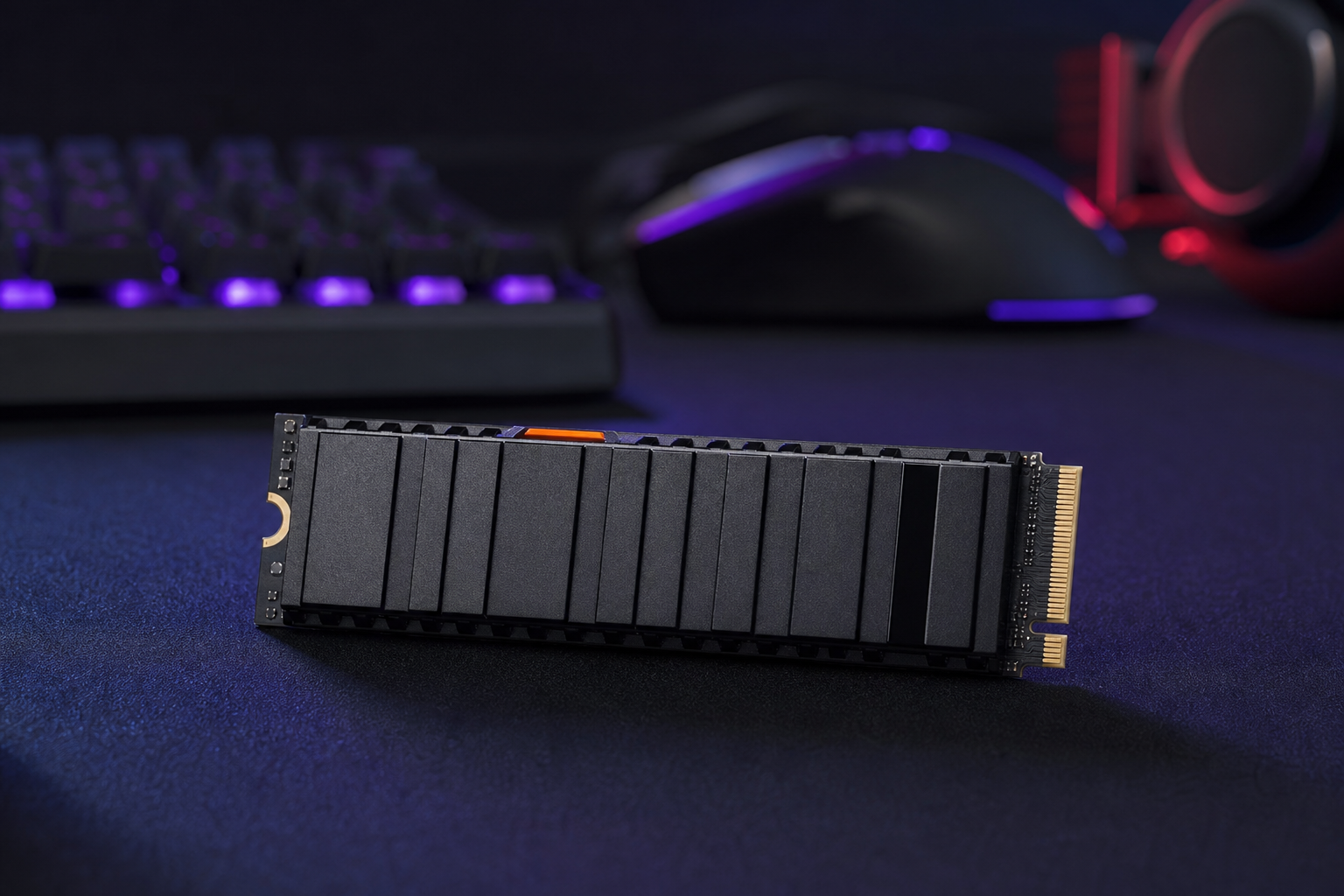
- +Ships with a PS5-compatible heatsink — no aftermarket purchase needed
- +Officially licensed by PlayStation with guaranteed compatibility
- +Same high-performance controller as the SN850X
- +2TB doubles the PS5's usable game storage
- -Slightly more expensive than the SN850X due to the included heatsink and licensing
- -Pre-installed heatsink makes it less ideal if your PC motherboard has its own
The SN850P is the SN850X with a PS5-ready heatsink pre-attached. If you are expanding PS5 storage, this is the easiest option — no heatsink shopping, no compatibility worries. It works in PCs too, but the SN850X is a better value if you do not need the PS5 heatsink.
Samsung T9 Portable SSD
Gamers who carry their library between a desktop and laptop or want fast external backup.
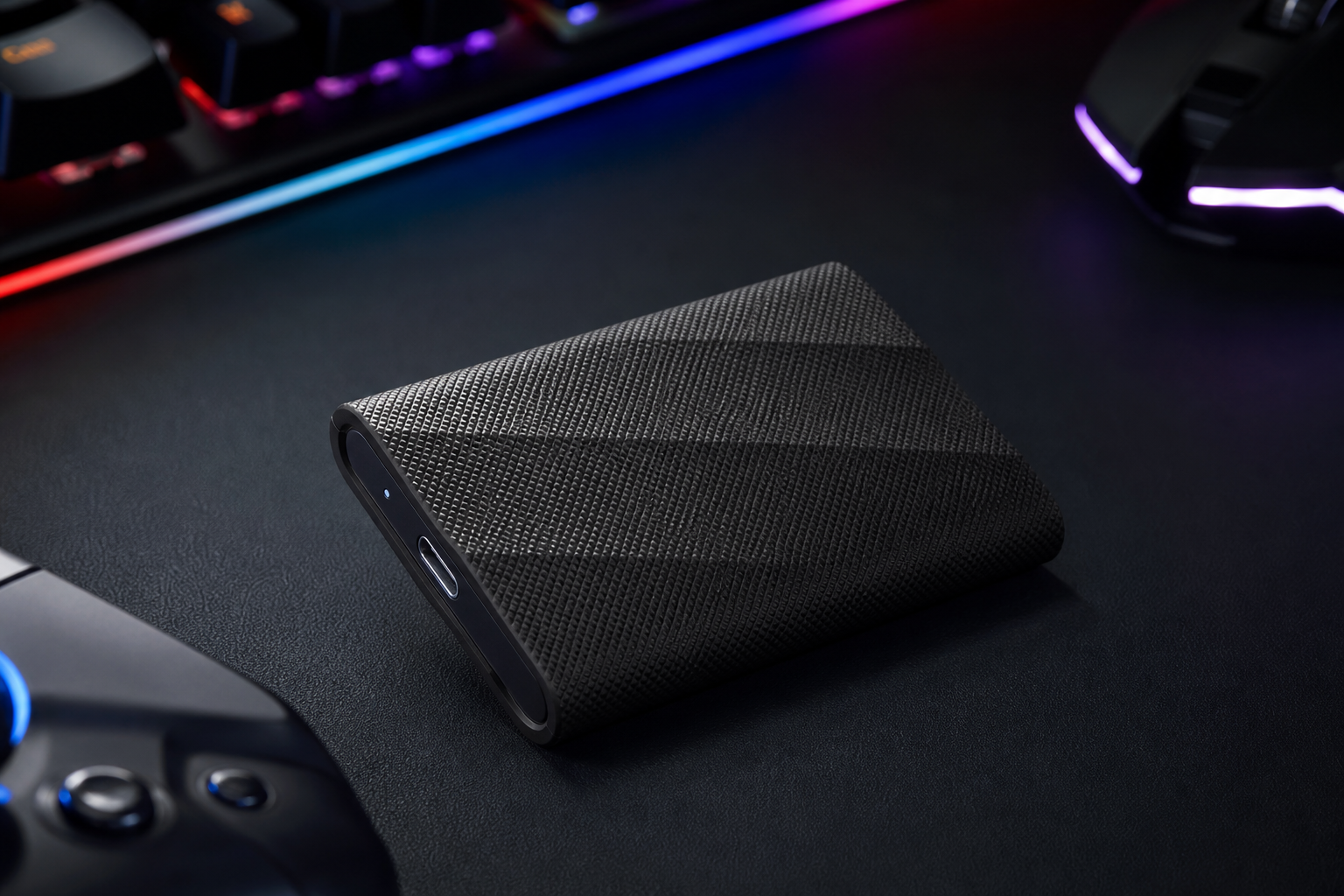
- +2,000 MB/s over USB 3.2 Gen 2x2 — twice the speed of the T7
- +Dynamic Thermal Guard prevents throttling during long transfers
- +Rubberized exterior survives 3-meter drops
- +AES 256-bit hardware encryption for data security
- -Requires a USB 3.2 Gen 2x2 port for full speed — most laptops only have Gen 2
- -Not a replacement for an internal NVMe for game load times
The Samsung T9 is the fastest portable SSD you can buy. At 2,000 MB/s, game installs and backups fly. It will not match internal NVMe load times due to USB overhead, but for transferring your library between machines or backing up saves, nothing external is faster.
WD Blue SN580
Budget secondary game drives where raw speed matters less than price per TB.
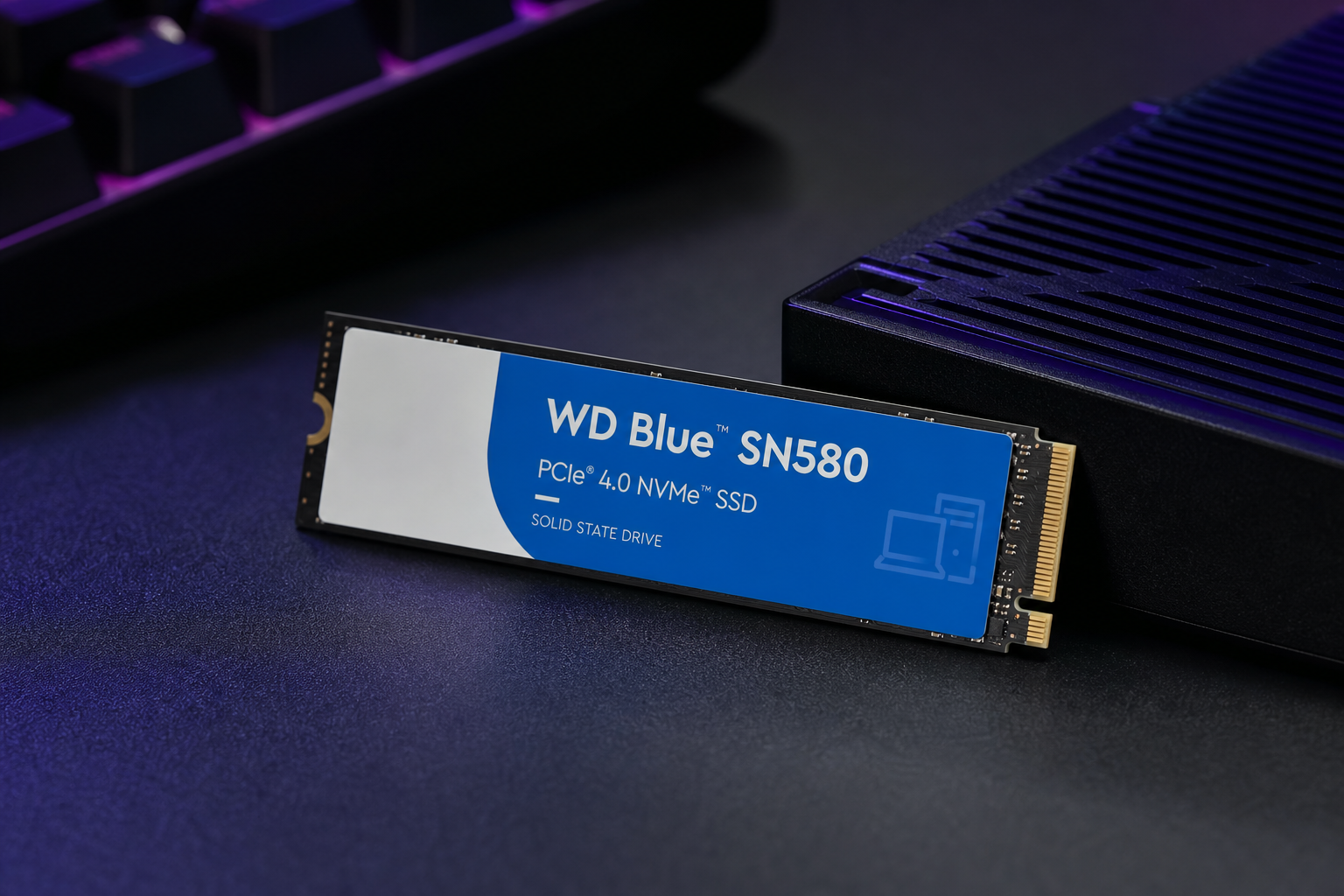
- +Excellent price per TB for a name-brand Gen 4 drive
- +HMB works well enough that gaming load times are indistinguishable from DRAM drives
- +900 TBW endurance is outstanding for a budget 2TB drive
- +Low power consumption and cool operation — no heatsink needed
- -No DRAM cache means performance can dip when the drive is over 80% full
- -Sequential speeds are slower than premium Gen 4 — fine for gaming, not ideal for large transfers
The SN580 proves that DRAM-less does not mean slow. Game load times are within 1 second of DRAM-equipped drives, and the price per TB is hard to beat. Use it as a secondary game drive alongside a faster boot SSD and save real money.
Kingston Fury Renegade G5
Gamers who want Gen 5 speed without paying full Gen 5 prices.
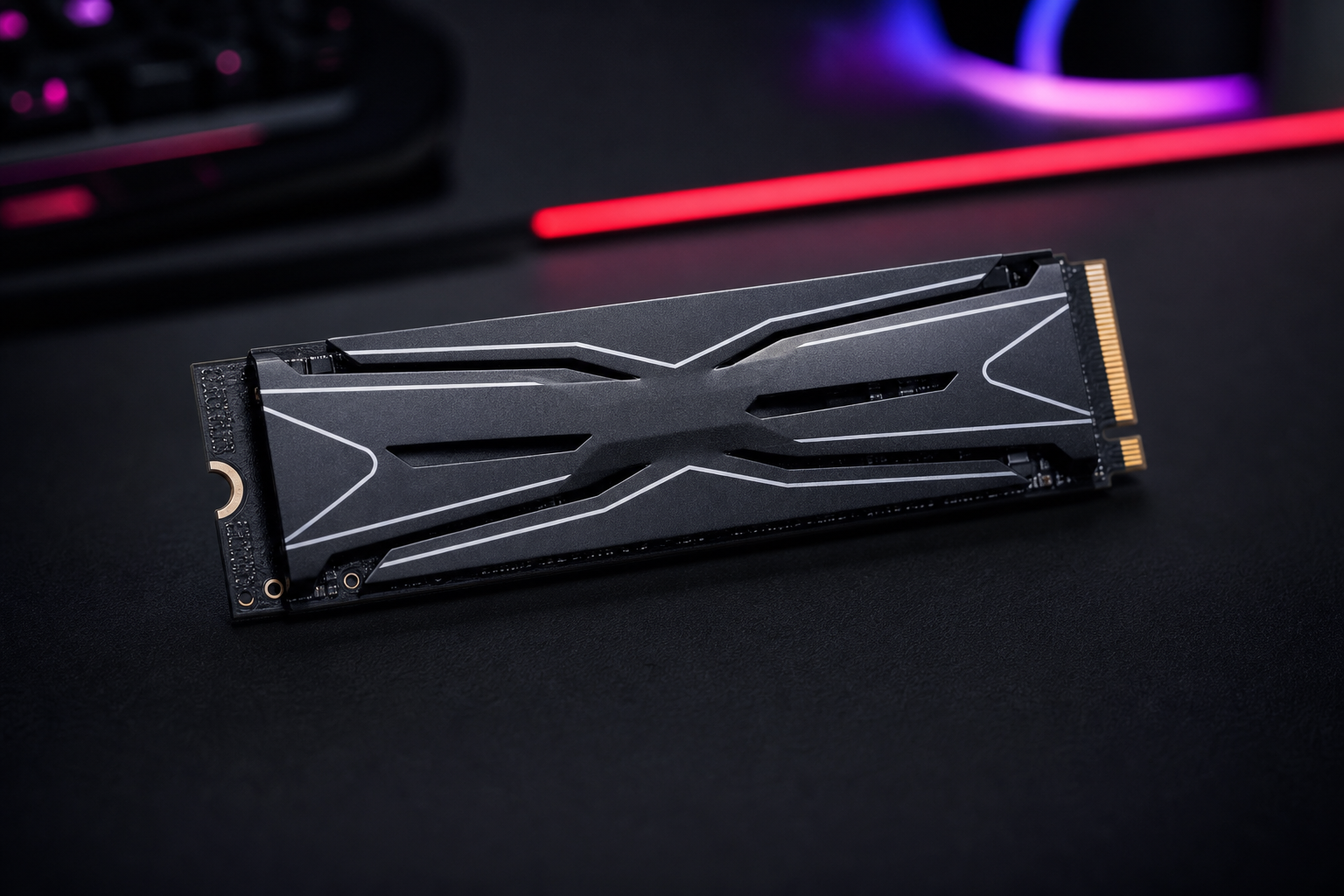
- +Gen 5 speeds at a price competitive with premium Gen 4 drives
- +10,000 MB/s reads noticeably speed up large game installs and transfers
- +2,000 TBW endurance is the highest in this price class
- +Included low-profile heatsink works with most motherboard M.2 covers
- -Not quite as fast as the WD SN8100 in peak sequential benchmarks
- -Still needs a heatsink — the included one is minimal
The Fury Renegade G5 hits the Gen 5 sweet spot. It is fast enough to justify the Gen 5 premium without costing as much as the absolute fastest drives. The 2,000 TBW endurance and competitive pricing make it our best overall value pick for anyone building a new PC in 2026.
How to pick the right gaming ssds
Gen 5 vs Gen 4: does it matter for gaming?
In real-world game load times, Gen 5 SSDs are only 1-3 seconds faster than Gen 4. The massive sequential speed difference (12,000 vs 7,000 MB/s) shows up in large file transfers and video editing, not in gaming. Gen 4 remains the sweet spot for most gamers in 2026 — save your money unless you have specific workstation needs.
How much capacity do you need?
Modern AAA games regularly exceed 100 GB. A 1TB drive holds about 8-10 large games. We recommend 2TB as the minimum for a primary gaming drive in 2026, with 4TB if you want to keep your entire library installed. Prices have dropped enough that 2TB Gen 4 drives are under $120.
DRAM cache explained
A DRAM cache stores the drive's mapping table in fast memory, which accelerates random reads — exactly what games need. DRAM-less drives use HMB (Host Memory Buffer) to borrow system RAM instead, which works fine for most gaming but can slow down when the drive is nearly full. For a boot drive, prefer DRAM; for a secondary game drive, DRAM-less is fine.
Endurance and TBW
TBW (Terabytes Written) measures how much data you can write before the warranty expires. A typical gamer writes 10-20 TB per year. Even a budget drive rated at 300 TBW will last 15+ years of normal gaming use. Do not stress about endurance unless you are running database or video editing workloads.
Heatsinks and thermals
Gen 5 drives run hot — above 70°C under sustained writes, which triggers thermal throttling. A heatsink (either motherboard-mounted or aftermarket) is essential for Gen 5. Gen 4 drives are less critical but still benefit from even basic thermal pads. Most modern motherboards include M.2 heatsinks.